
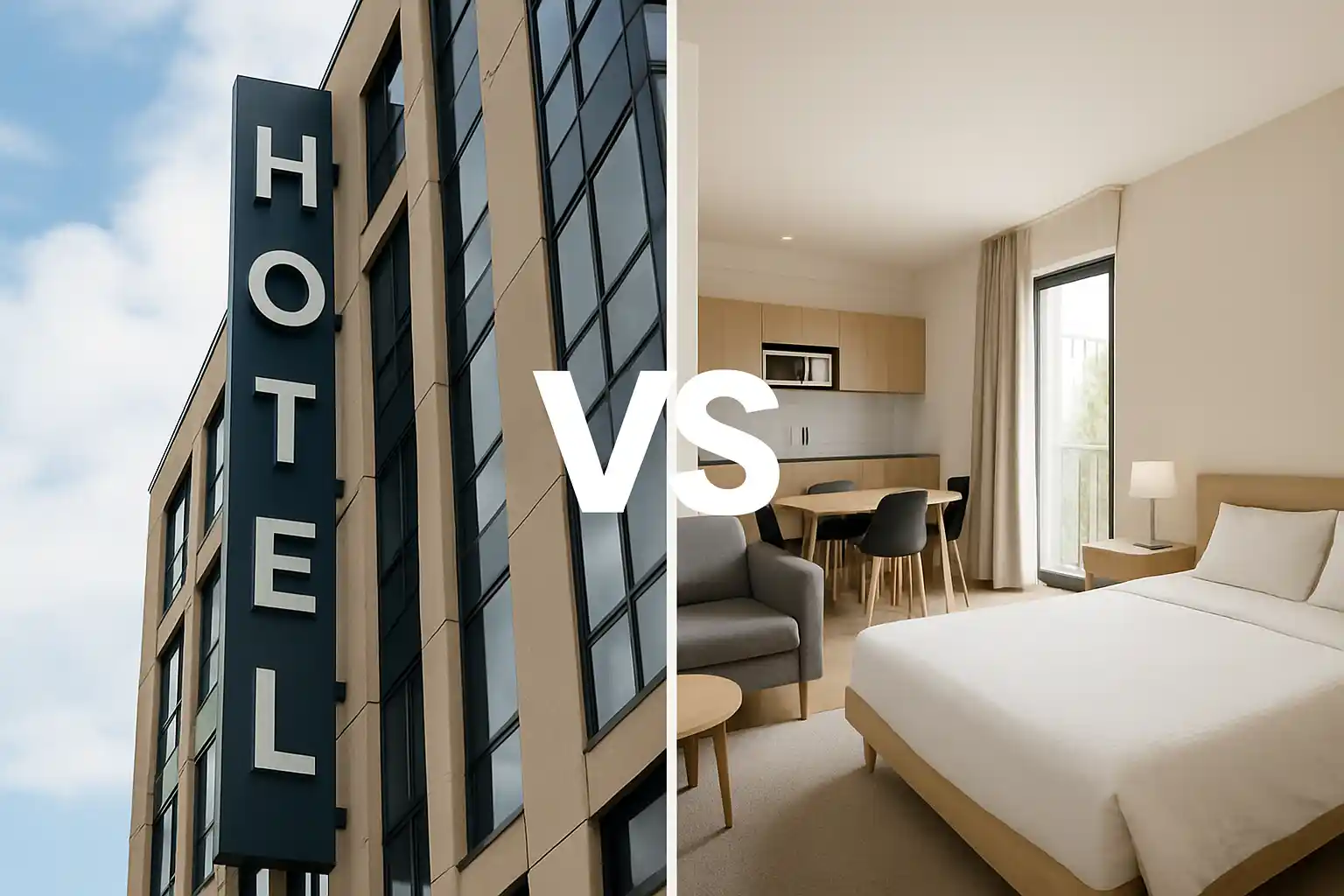
Airbnb vs Hotel Comparison: Costs, Comfort, and Convenience
Travelers love a good deal, but they also want a smooth trip. If you’re weighing an airbnb vs hotel for your next adventure, this guide breaks down real-world trade-offs so you can choose a place to stay that fits your plans and budget. Greenspicks is a travel meta-search site, use it to scan accommodation options quickly, compare the latest rates, and lock in the setup that matches your style.
Key Differences
Before diving deep, here are the key differences most travelers notice:
- Price structure (nightly rate, cleaning fees, taxes).
- Where the value shows up (space, kitchen, privacy vs. services, security, on-site perks).
- Check-in flow (check-in vs. app/code access).
- Formal support (front desk and hotel concierge vs. individual hosts or a management company).
- Predictability (brand standards vs. unique homes).
Costs at a Glance: Per Night, Fees, and Taxes
When you compare totals per night, you’ll see big variations. Airbnb prices can look low at first, then jump with cleaning fees and local taxes at checkout. Hotel prices often feel higher on the search page but include daily housekeeping, loyalty points, and easier cancellation. If two listings land around the same price as a hotel, consider what’s baked in, services, security, and flexibility. An airbnb may still win with more space, a kitchen, or parking; a hotel may deliver better reliability and perks. The “better deal” depends on your trip length, city, and needs.
What Actually Drives the Total
- Airbnb’s pricing can be fee-heavy for short stays, then average out over longer stays.
- Small add-ons matter: think resort charges, “destination” fees, or premium amenity charges.
- Extras you find in a hotel, breakfast, late checkout, gym, can tip the balance.
- Upgrades and amenities like lounge access or spa credits are easier to quantify in brands.

Comfort & Space: What You Get Inside
A hotel room is consistent: bed, bath, desk, TV. Upscale options add plush bedding and quieter floors. A luxury hotel layers on thick soundproofing and elevated linens; luxury hotels offer calmer lobbies and professional service teams. At a home-style stay you’ll usually get a kitchen, living area, and more square footage. Families love spreading out; remote workers like having a table to spread projects. If you crave charm, boutique hotels can feel like private residences, with artful touches and curated neighborhoods, while a budget hotel is lean but efficient.
Guest Experience & Peace of Mind
Brand hotel chains and traditional hotel setups thrive on consistency. Hotels offer front desks, maintenance crews, and layered security like key card access. That predictability brings peace of mind. On the other side, airbnb offers uniqueness, historic lofts, cabins, beach cottages. Some are run by an experienced management company; others by individual hosts. The quality swing can be wider, but the personality can be a delight. Smooth check-in and check-out flows matter too; codes and smart locks now rival lobby desks for convenience.
Lodging by Trip Type
Matching the stay to your itinerary makes all the difference in your travel experience.
Weekend City Runs: When to Stay at a Hotel
Short trips reward speed. You want easy check-in, transit-friendly locations, and quick help if something breaks. If you’ll be out all day, the room is mostly a crash pad. Stay at a hotel for predictable comfort; sometimes a hotel near a train hub is worth every penny. With many hotels in one district, you can compare hotel options side-by-side and pick what fits your vibe in the hotel industry ecosystem.
Families and Friends: Staying in an Airbnb
Staying in an airbnb (or other vacation rental/short-term rental) means space to cook, chat, and unwind without squeezing around a tiny desk. Staying at an airbnb with a proper kitchen keeps breakfast easy and budgets happy. Larger airbnb properties or multi-bedroom airbnb rentals shine for longer stays, letting everyone relax.
Business Travel: Services and Speed
Road-warriors tend to value desk space, quiet floors, and on-site support. Hotel room layouts are predictable; hotels often include work chairs that won’t wreck your back. If your calendar is packed, having a hotel concierge to sort a ride or dinner booking is pure relief. Reliable key card access and housekeeping add to the rhythm.
Remote Work & Long-Term Travel
For multi-week moves and long-term travel, a great host makes it easy to settle in. A trusted airbnb superhost can help with upgrades for comfort. If you can find one airbnb with a quiet workspace and reliable Wi-Fi, that stability matters. Airbnb is generally more cost-effective over weeks, especially when you cook at home. If you prefer lounge access and daily service, stay at hotels with extended-stay wings.
Pros and Cons: Airbnb and Hotels
Let’s look at the pros and cons, the real advantages and disadvantages travelers talk about when comparing airbnb and hotels.
Pros of Home-Style Stays
- Space to spread out; a kitchen for real meals.
- Neighborhood charm and local character (airbnb versus branded design).
- Often better for longer stays and groups.
- Variety across airbnb properties and unique layouts.
Cons of Home-Style Stays
- Quality varies between guests and hosts.
- Fewer formal services; support may rely on many airbnb hosts juggling calendars.
- Fees stack up on short trips.
- Policies can differ between an airbnb and a hotel, read carefully.
Pros of Branded Stays
- Consistent rooms; hotels are typically standardized.
- Service depth, maintenance, front desk, hotels also have on-call teams.
- Earn points; elite perks in hotel chains.
- Security layers, hotels are often central, lit, and staffed 24/7.
Cons of Branded Stays
- Less space for the price; kitchens are rare unless it’s an apart-hotel.
- Resort or destination fees sometimes appear; hotels tend to charge for parking in city cores.
- Fewer residential comforts unless you pick special suites.
If you’re deciding hotel vs home-style, list your non-negotiables (desk, blackout blinds, washer, balcony). Your “musts” will often decide it for you.
Booking Tips to Get a Great Airbnb or Solid Hotel Stay
Savvy booking is where you win value, regardless of category.
How to Use Airbnb Well
- Search for a great airbnb by filtering for essentials, quiet hours, reliable Wi-Fi, blackout curtains.
- Read cancellation terms and house rules; think about your travel plans and flexibility.
- Good hosts cater to guests with clear instructions and quick replies.
- Want reliability? Filter for a airbnb superhost badge and check recent reviews.
- People sometimes type air bnb, whatever you call it, vet listings carefully to avoid surprises.
- The benefits of airbnb also include longer-stay discounts; stay flexible on dates to see hidden deals.
How to Compare Across Platforms
- Put airbnb and hotels on one spreadsheet so you can truly compare airbnbs and hotels across size, commute time, and total price.
- For brand stays, judge location by transit time and late-night safety, not just distance.
- For homes, scan the building’s rules; high-rise security may add friction or comfort depending on your type of experience.
Safety, Support, and Policies
When things go wrong, response speed matters. Brands have escalation paths, while airbnb rentals rely on host responsiveness or platform assistance. A building run by a management company is usually smoother than a one-off sublet. In hotels, layered staff support and key card access feel straightforward. In home stays, strong manuals, labeled switches, and local tips can bring that same ease, especially if your host sets up a thoughtful digital guide.
When the Math Changes: Fees, Space, and Services
There’s no universal winner; it’s always trip-by-trip. If your city has high cleaning costs, a two-night home stay can be pricey, while week-long pricing flattens out. If the lounge breakfast saves you 90 minutes a day, that time is worth money. If you’re a light sleeper, new construction in a city tower can beat a charming century home on a loud block. Pros and cons of using either option change with your priorities.
Real-World Scenarios
- Solo weekend: You’ll be out exploring. A lean, central brand wins on simplicity. Quick check-in, quiet floor, done.
- Friends’ reunion: A multi-bedroom vacation rental where you can throw a pizza night and talk until 2 a.m.
- Conference: Walkable hotel room near the venue beats a cheaper place that drains energy with a long commute.
- Slow travel month: Neighborhood apartment with a balcony, a real desk, and a market nearby.
- Special occasion: Luxurious hotels or standout lofts; either can be the mood-setter you’re after.
Finding Value Across Seasons
- Big cities: Business districts can be quiet (and discounted) on weekends; hotels often drop rates then.
- Beach towns: Homes go fast during school breaks; book early and confirm AC, shade, and parking.
- Ski weeks: Compare condos vs. brand suites, walkability to lifts can be more valuable than raw square footage.
- Shoulder seasons: Airbnb also sees deals when demand dips; flexible dates unlock hidden rates.
What to Check Before You Pay
- Address exact location and floor noise.
- AC/heat details; radiators vs. thermostats.
- Bed sizes (US queen vs. EU double differ).
- Shower pressure and water heater type.
- Workspace: seat height, outlets, and lighting.
- Policies for pets, smoking, and visitors.
- Elevator vs. walk-up; stairs matter with luggage.
- Clear check-in and check-out instructions.
Comparing Support: People and Processes
In brand stays, staff are trained to solve problems fast. In home stays, many airbnb hosts perform at that same level; some don’t. Read messaging tone and response times. If a listing is run by a reliable management company, you’ll usually get a polished welcome, extra towels, and prompt fixes. Whether you use airbnb or pick a brand, save emergency numbers offline in case your phone dies.
Who Should Choose What?
- Choose to stay in a hotel if you want structured service, points, central locations, and consistent comfort.
- Choose airbnb if you crave space, a real table for meals, and a neighborhood vibe.
- If you want the middle ground, apart-hotels and branded residences allow guests to stay with kitchens plus a front desk.
Your Search Strategy with Greenspicks
Start broad to see the full field of hotel options and homes. Filter for must-haves, then sort by total cost including fees. Pin two finalists: a strong brand and a standout home. Message the airbnb host if anything’s unclear. Keep screenshots of policy pages in case you need to show what was listed later. For both hotels and airbnb, look beyond photos, read recent reviews for water pressure, Wi-Fi speeds, and neighborhood noise at night.
The Final Take
There isn’t a universal winner in airbnb versus brand stays. There are only smart matches between trip goals and properties. For a busy two-night city break, brands are effortless. For a week with friends, homes rule. For hybrid trips, try both, two nights in town, then a quiet loft. Greenspicks helps you scan choices fast, compare totals, and snag the setup that fits how you travel.
Frequently Asked Questions
1) Is an airbnb vs hotel generally cheaper?
Short trips often favor brands once you factor cleaning fees and time saved. Weekly longer stays can tilt toward homes thanks to space and cooking.
2) What are the biggest pros and cons for families?
Homes give room to gather, a kitchen, and laundry. Brands win on safety layers and staff. Weigh your schedule and which services matter most.
3) How do I avoid surprises when staying at an airbnb?
Read house rules, inspect checkout tasks, and confirm essentials with the airbnb host. Favor recent reviews and a airbnb superhost badge.
4) When should I absolutely stay at hotels?
Tight schedules, business events, late arrivals, or locations where you want front-desk support and key card access without guessing at building rules.
5) What’s the fastest way to compare airbnbs and hotels?
Use Greenspicks to scan airbnb and hotels side-by-side, then tally total price per night with fees. Rate each for location, sleep quality, and workspace before you decide.