
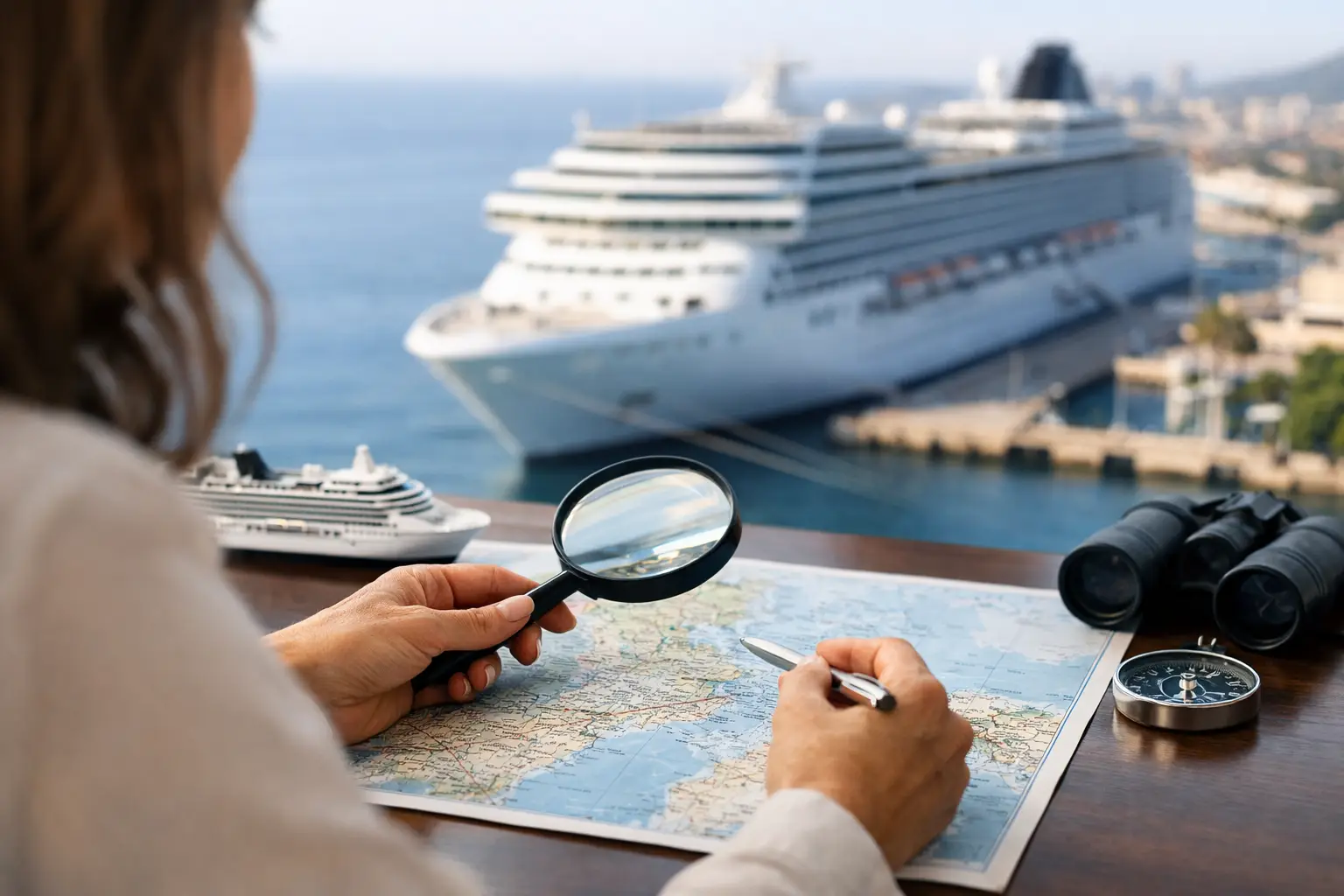
How to Find Cruises by Departure Port: The Smart Traveler’s Guide for 2026 🚢
Last updated: May 2026 | Reading time: ~10 minutes
If you’ve ever found a “perfect” cruise deal online, only to realize the ship sails from a port two flights and a hotel night away from home, you already understand why finding cruises by departure port is one of the smartest moves a traveler can make. The port you choose affects far more than just embarkation day. It shapes your total trip cost, the destinations you can reach, the vacation days you’ll burn, and how stressed (or relaxed) you’ll feel before you even step on board. ⚓
After helping hundreds of US travelers plan cruises and tracking real-world booking patterns over the past several years, one truth stands out: the cheapest fare is rarely the cheapest vacation. Let’s break down exactly how to use departure ports to find better cruises, save real money, and skip the rookie mistakes that turn a “deal” into a budget-buster.
 Major US cruise ports like Miami serve millions of travelers each year but the best port for you isn’t always the biggest one.
🎯 Why Departure Ports Matter More Than You Think
Most cruisers shop the way most people shop for flights: destination first. It feels intuitive “I want to go to the Bahamas” but it almost always creates extra work and extra cost. You find an itinerary you love, then realize the port is inconvenient, hotels nearby are pricey, or the airfare wipes out your savings.
Reversing the process is where the magic happens. Start with the port. Then compare the sailings that match.
Here’s why this approach wins:
- ✅ Fewer moving parts — less to coordinate, less to go wrong
- ✅ Lower total trip cost — no surprise transportation expenses
- ✅ Better use of vacation days — no wasted time in airports
- ✅ Realistic shortlists, fast — narrow hundreds of cruises down to the ones that actually fit your life
- ✅ Lower pre-cruise stress — drive-to ports skip TSA entirely
🇺🇸 The Top US Cruise Departure Ports at a Glance
Not every port serves the same kind of traveler. Some are built for short Caribbean getaways, others for bucket-list itineraries. Here’s a quick comparison based on what each port does best:
| Departure Port | Best For | Typical Itineraries | Drive-To Range |
|---|---|---|---|
| Miami, FL 🌴 | Variety seekers, big-ship lovers | Caribbean, Bahamas | Southeast US |
| Port Canaveral, FL 🚀 | Families, Disney/Orlando combos | Bahamas, Caribbean | Southeast US |
| Fort Lauderdale, FL ⛵ | Repositioning, longer sailings | Caribbean, Panama Canal | Southeast US |
| Galveston, TX 🤠 | Texas + Central US travelers | Western Caribbean, Mexico | Texas, Oklahoma, Louisiana |
| New Orleans, LA 🎷 | Pre-cruise atmosphere lovers | Western Caribbean | Gulf Coast, Mid-South |
| Seattle, WA 🏔️ | Alaska seekers | Alaska, Pacific Coast | Pacific Northwest |
| Los Angeles/Long Beach, CA 🌅 | West Coasters | Mexico, Hawaii, Pacific | Southern California |
| New York/Bayonne, NJ 🗽 | Northeast residents | Bermuda, Canada/New England | Northeast Corridor |
| Baltimore, MD ⚓ | Mid-Atlantic drivers | Bahamas, Bermuda | DC, PA, VA, NJ |
💡 Expert Tip: If you live within a 6-hour drive of a port, drive-to almost always beats fly-to once you factor in airfare, baggage fees, parking at the airport, and the risk of flight delays disrupting embarkation.
🗣️ Real Traveler Experiences: What Cruisers Actually Say
The best cruise advice doesn’t come from glossy brochures — it comes from people who’ve made the mistakes (and the wins). Here are three real-world patterns we see again and again:
👨👩👧👦 The Rodriguez Family — Houston, TX
The Rodriguez family of four spent weeks comparing a $499 per person Miami sailing against a $599 per person Galveston cruise. The Miami fare looked like the obvious win until they added it all up:
- 4 round-trip flights HOU → MIA: ~$1,200
- Pre-cruise hotel night in Miami: ~$220
- Airport-to-port transfer: ~$120
- Checked baggage fees: ~$240
Total Miami “savings”? Gone and then some. They drove to Galveston, parked at the port for 7 days, and arrived rested. Final verdict: the “more expensive” cruise saved them nearly $1,400.
💑 Marcus & Kelly — Couples Cruise from Seattle
Marcus and Kelly live in Portland, Oregon. They almost booked an Alaskan cruise out of Vancouver because the fare was $200 less per person until they realized the passport requirement, currency exchange, and longer drive added stress and cost. Sailing from Seattle gave them a 3-hour drive, no border crossing, and the same scenic Inside Passage. Lesson learned: closer isn’t always cheaper, and “cheaper” isn’t always closer.
🧳 Janet — Solo Cruiser from Tampa
Janet, a retired teacher near Tampa, swears by departure-port-first booking for solo travelers. Because she lives 90 minutes from a major port, she can grab last-minute cabin deals other cruisers can’t touch flights and hotels would eat the discount. She’s averaged 4 cruises a year for the price most people pay for two. (If solo last-minute booking interests you, our Last Minute Cruise Deals guide breaks down exactly how to find them.)
 For families and groups, drive-to ports often translate into thousands of dollars saved over the course of a single cruise.
⚖️ Drive-To Port vs. Fly-In Port: The Honest Pros & Cons
Both options have legitimate strengths. Here’s the no-nonsense breakdown:
✅ Pros of Driving to a Nearby Port
- 🚗 Total cost is usually lower (especially for groups of 3+)
- 🧳 No baggage limits — bring as much as your trunk holds
- ⏰ Same-day embarkation is realistic — no flight risk
- 😌 Lower stress — no TSA, no gate changes, no lost luggage
- 📅 More time-efficient — a 4-night cruise can be a long weekend
❌ Cons of Driving
- 🛑 Limited itinerary choices — your local port may not sail where you want to go
- 💰 Port parking adds up — typically $20–$25/night
- 🚙 Long drives can be tiring for the day before boarding
- 🚢 Fewer ship options — newer ships may sail from other ports
✅ Pros of Flying to a Cruise Port
- 🌎 Access to any itinerary — Panama Canal, Hawaii, transatlantic
- 🛳️ More ship variety — newer, larger, more luxurious options
- 💸 Sometimes cheaper cruise fares due to higher port competition
- 🏝️ Pre/post-cruise extension opportunities — turn a cruise into a full vacation
❌ Cons of Flying
- ✈️ Flight risk on embarkation day even one delay can cost you the cruise
- 💳 Airfare + bags + transfers stack up fast for families
- 🏨 Pre-cruise hotel often required to be safe
- 😬 More vacation time consumed on travel logistics
💡 Expert Tip: If you must fly, fly in the day before never on embarkation day. The cruise won’t wait, and travel insurance won’t cover a missed sailing if it was your scheduling choice. For finding cheap flights to your port, our guide on the Cheapest Days to Fly in 2026 is a great starting point.
🧭 How to Choose the Right Departure Port: A 5-Step Method
This is the framework experienced cruisers actually use:
Step 1️⃣: Map Every Port Within Reasonable Reach
List every cruise port within ~6 hours of driving. Then list 1–2 fly-to ports that consistently get cheap nonstop flights from your home airport. That’s your candidate list.
Step 2️⃣: Calculate the Total Trip Cost — Not the Fare
Use this formula: Cruise fare + transportation + parking/baggage + pre-cruise hotel + transfers = real trip cost
You’ll often find a “more expensive” cruise from a closer port is actually cheaper overall.
Step 3️⃣: Match the Itinerary to the Port
Some ports just don’t go where you want. If your dream is the Mediterranean, no Florida port will help. If you want the Bahamas, almost any East Coast port will work.
Step 4️⃣: Factor in Your Vacation Days
A 4-night cruise from a drive-to port = long weekend. A 4-night cruise that requires flying both ways = nearly a full week. Time is money. Count it that way.
Step 5️⃣: Check Port Logistics Before You Commit
Some ports have notoriously slow embarkation, expensive parking, or limited rideshare access. A 30-minute Google search before booking can save you a 3-hour headache on cruise day.
🚨 Expert Warnings: Mistakes That Cost Cruisers Real Money
After years of watching travelers book and sometimes regret their cruises, these are the most common (and expensive) mistakes:
- ❌ Treating the departure port as an afterthought. It’s the most cost-impactful decision you’ll make.
- ❌ Booking a same-day flight to the port. A single delayed flight = a missed cruise = thousands lost.
- ❌ Forgetting about port parking. A $25/night port garage on a 10-night cruise = $250 you didn’t budget for.
- ❌ Assuming all “nearby” ports are equally accessible. Some are 90 minutes from the airport, others are right next to it.
- ❌ Ignoring passport rules. Closed-loop sailings vs. open-jaw sailings have different ID requirements. Check before you book.
- ❌ Skipping travel insurance for fly-in cruises. This isn’t optional if you’re flying it’s protection against the very real risk of missing the ship.
💡 Expert Tip: Always check what airport(s) serve your potential cruise port and how reliable nonstop service is from your home city. A port served only by one airline with frequent delays = a high-risk booking.
 Larger ports like Fort Lauderdale and Miami offer more competition between cruise lines which often means lower fares for travelers willing to fly in.
🏠 When a Nearby Port Is the Smart Move
Choose a local or regional port when:
- 👶 You’re traveling with kids or seniors
- 💵 You’re working with a tight budget
- ⏱️ You only have a few vacation days
- 🆕 You’re a first-time cruiser (less stress = better experience)
- ⚓ The cruise itself is short (3–5 nights)
- 🚗 You’d rather drive than fly anyway
If shorter, easier getaways are your style, you might also enjoy our roundup of Last Minute Weekend Getaways for 2026 many of which pair perfectly with quick drive-to cruises.
🌍 When a Farther Port Is Worth the Extra Effort
Sometimes the right port is the one that requires a flight. Choose a farther port when:
- 🚢 You want a specific ship class (newer, larger, luxury)
- 📅 You need flexibility on sailing dates
- 🌴 You’re after a specialty itinerary (Panama Canal, Hawaii, Transatlantic, Southern Caribbean)
- 🛏️ You want pre/post-cruise vacation time anyway
- 💰 The fare savings genuinely exceed your travel costs
For couples planning a longer escape, comparing a cruise against a resort stay can be eye-opening our guide to the Best All Inclusive Resorts for Couples in 2026 is a helpful side-by-side read.
💵 Real-World Cost Comparison: Same Cruise, Two Ports
Let’s run the numbers on a hypothetical 7-night Western Caribbean cruise for a family of 4 from Dallas, Texas:
Option A: Sail from Galveston (Drive-To)
- Cruise fare (4 people): $2,800
- Gas + tolls (round trip ~580 mi): $90
- Port parking (7 nights): $120
- Total: $3,010 ✅
Option B: Sail from Miami (Fly-In)
- Cruise fare (4 people): $2,400
- 4 round-trip flights DAL → MIA: $1,400
- Pre-cruise hotel: $240
- Airport-to-port transfer: $140
- Checked baggage fees: $240
- Total: $4,420 ❌
Difference: $1,410 saved by choosing the closer port even though the cruise fare itself was $400 more expensive.
The math isn’t always this dramatic, but it’s almost always the same direction: nearby ports usually win for families and groups. If beach getaways are still on your radar even with these numbers, our roundup of Top Affordable All Inclusive Resorts in Mexico 2026 shows how cruise dollars sometimes stretch further on land.
❓ FAQs
What does “cruise departure port” actually mean?
It’s the city and terminal where your cruise begins boarding and sets sail on day one. The same ship may use different home ports throughout the year, especially seasonally.
Is it cheaper to book a cruise from a nearby port?
Often yes but not always. The only honest answer comes from calculating your total trip cost, including flights, hotels, parking, transfers, and baggage fees. Don’t compare cruise fares in isolation.
Which US ports have the most cruise options?
Miami, Fort Lauderdale, and Port Canaveral consistently lead the pack with the widest variety of ships, itineraries, and cruise lines. Galveston and Seattle are runners-up depending on which region you’re sailing.
Should I fly in the same day my cruise departs?
🚫 No. This is one of the most expensive mistakes cruisers make. Always fly in at least the day before ideally two days before for international embarkations. The ship absolutely will not wait.
Is the closest port always the best one?
No. The best port balances convenience, total cost, itinerary quality, and travel time. Sometimes that’s the closest one. Sometimes it’s a port a flight away. The point is to compare honestly.
Do I need a passport to cruise from a US port?
For most “closed-loop” cruises (start and end at the same US port), a US birth certificate plus a government-issued ID is technically allowed for US citizens. However, a passport is strongly recommended in case of medical emergencies or missed ports requiring you to fly home internationally.
When is the best time to book a cruise?
That depends on whether you want the best price (typically 90–120 days out) or the best last-minute deal (within 30 days, but with limited cabin choices). The “Wave Season” (January–March) often features the strongest promotions for the year ahead.
🎯 The Bottom Line
Choosing your departure port first before the destination, the ship, or the fare is the single most underrated cruise-planning move out there. It cuts down decision fatigue, exposes hidden travel costs, and gets you to a realistic shortlist faster than any other approach.
✅ Drive-to ports usually win for families and short cruises. ✅ Fly-in ports win when itinerary or ship variety matters more than convenience. ✅ The “cheapest fare” rarely equals the cheapest vacation. ✅ Always calculate total trip cost, not just cruise fare. ✅ Never fly in on embarkation day. (Seriously. Don’t.)
Before you commit to that perfect-looking cruise on the first screen of search results, take ten minutes to compare it against the same itinerary from a different home port. That single habit will save the average US cruise traveler hundreds sometimes thousands over the course of a few sailings. ⚓
Have you tried the departure-port-first method? We’d love to hear how it worked for you. Share your story in the comments below, or check out more smart-traveler guides over on the GreenSpicks blog. 🌊