Did you know that none of the major rental companies openly promise unlimited mileage for a cross-country road trip? It’s a benefit many travelers just assume they’ll get. But here’s the reality: if you don’t plan ahead, that road trip can cost way more than you expected. In this guide, we’ll walk you through the exact steps to rent a car for a road trip without getting stuck with hidden fees or the wrong vehicle. We’ve compared the biggest brands, looked at real data, and talked to people who’ve done it. By the end, you’ll know exactly how to save money, pick the perfect car, and avoid common mistakes. Let’s get started.
Step 1: Determine Your Budget and Understand All Costs
The first thing you need to do is figure out what you can spend. But it’s not just about the daily rate. Many folks only look at the base price and then get shocked by all the add-ons. When you rent a car for a road trip, you’ve got to think about more than just the rental fee.
Here are the real costs you’ll face:
- Base rate: This is what you see on the website. But it’s not the final price.
- Taxes and fees: Airport surcharges can add 20-30%. Some cities charge extra taxes. Always look at the total.
- Insurance: You might need to buy coverage from the rental company. That can be $15-$30 per day.
- Fuel: Unless you get unlimited miles (which we’ll talk about), gas is a big chunk. For a 1,000-mile trip, budget $100-$150.
- Mileage fees: Some rentals charge per mile after a certain limit. Check before you book.
- Additional drivers: Adding a second driver can cost $10-$15 per day.
- Young driver fee: If you’re under 25, expect an extra $25-$30 per day.
According to Orbit Car Hire’s breakdown of hidden fees, many travelers end up paying 50% more than the base rate because they don’t read the fine print. Our advice? Always look for the total price, including taxes and fees, before you compare. Sites like GreenSpicks show you the all-in price upfront.
“The cheapest base rate is often the most expensive rental once you add all the fees.”
Another cost people forget is the deposit. Most companies hold $200-$500 on your credit card until you return the car. Make sure you have enough available credit.
Also, think about tolls. If you’re driving through states like Texas or Florida, toll roads are everywhere. Rental companies often charge a fee to use their transponder. Better to bring your own or pay cash.
Finally, plan for the total cost of your USA trip including car rental, gas, and lodging. It helps to have a full picture.
Bottom line: Always calculate the total cost including fees, insurance, fuel, and mileage before you book so you’re not surprised at the counter.
Step 2: Choose the Right Vehicle for Your Road Trip
Choosing the right car is huge. If you pick something too small, you’ll be crammed. Too big, and you’ll waste gas and have trouble parking. When you rent a car for a road trip, think about these things:
- Number of passengers: How many people are coming? Each person needs a seat and space for their bags.
- Luggage space: Don’t just count suitcases. Strollers, coolers, camping gear all take up room.
- Fuel economy: A compact car might get 35 mpg, while an SUV gets 20 mpg. That difference adds up over hundreds of miles.
- Comfort: You’ll be sitting for hours. Good seats and a smooth ride matter.
- Special needs: Going off-road? You’ll want an SUV or all-wheel drive – for deeper tips, check our 4WD rental guide.
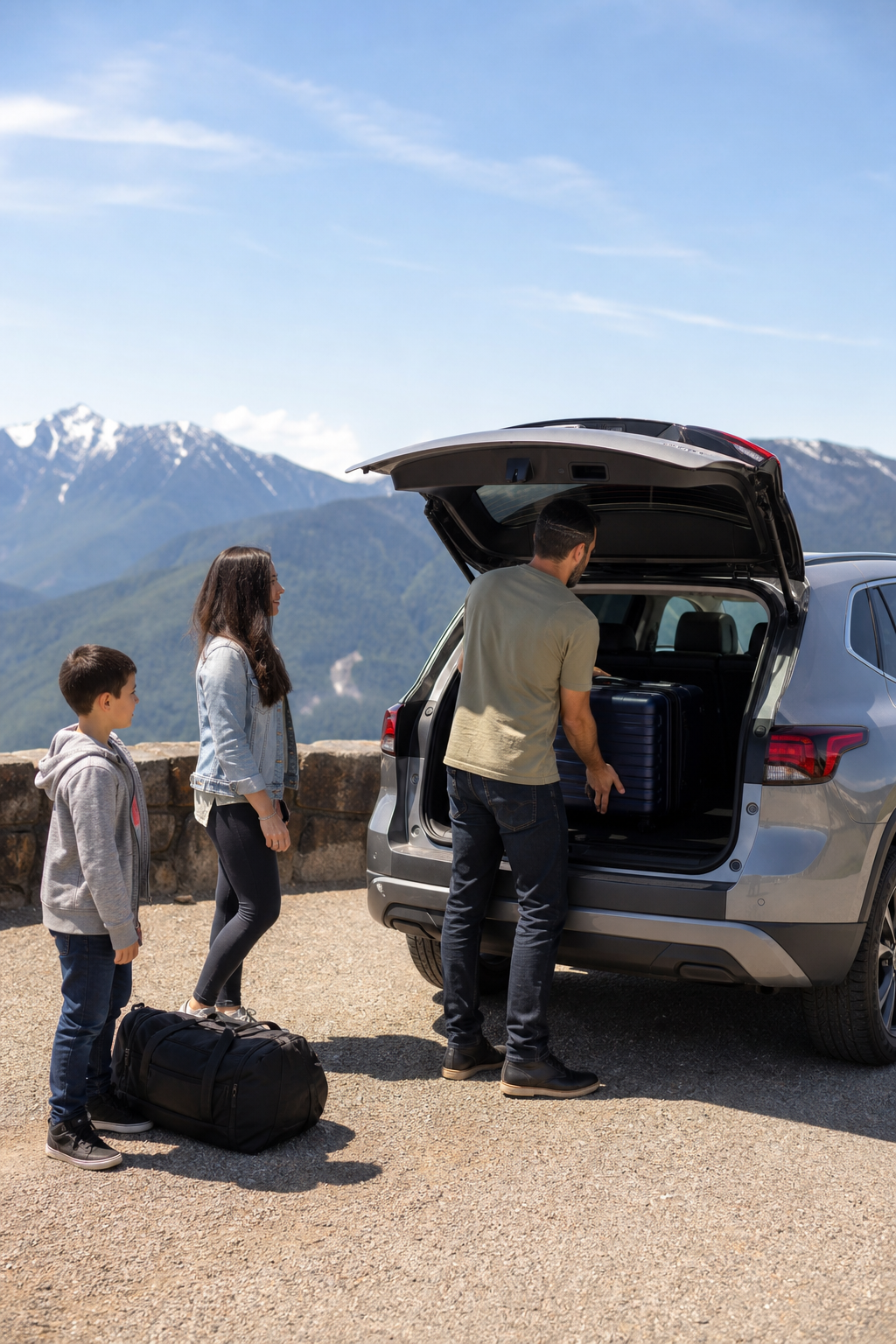
Here’s a quick comparison table of popular car types for road trips:
| Car Type | Best For | Fuel Economy (mpg) | Space | Pros | Cons |
|---|---|---|---|---|---|
| Compact (e.g., Honda Civic) | Solo or couple | 30-35 | Limited trunk | Cheap, efficient, easy to park | Can feel cramped for longer trips |
| Mid-size sedan (e.g., Toyota Camry) | Couple or small family | 28-32 | Good trunk | Comfortable ride, good mpg | Not enough space for 4+ with gear |
| SUV (e.g., Ford Escape) | Families or groups | 22-28 | Spacious cargo | More room, high seating position | Lower gas mileage, costs more |
| Minivan (e.g., Chrysler Pacifica) | Large families | 22-25 | Maximum passenger + cargo | Best for space, sliding doors | Bulkier, harder to park |
| Pickup truck (e.g., Ford F-150) | Hauling gear or towing | 18-22 | Open bed | Capability, off-road potential | Poor mpg, no covered storage |
We recommend going one size up from what you think you need. If you think a compact will work, try mid-size. The extra space makes a big difference on long drives. Also, if you’re renting for a week or more, consider a car with better fuel economy. A hybrid like the Toyota Prius can save you $50-$100 on gas compared to an SUV.
MotorTrend’s list of best road trip cars highlights the Honda Civic Hybrid and Subaru Outback as top choices. Both offer good mileage and comfort. We agree.
Don’t forget to check the car’s features. Built-in GPS, Apple CarPlay, and USB ports can make the drive much more enjoyable. But you can always use your phone for navigation (more on that later).
Bottom line: Pick a vehicle that fits your group size and luggage needs, and prioritize fuel economy to save money on gas over hundreds of miles.
Step 3: Find the Best Deal with Discounts and Peer-to-Peer Rentals
Now that you know your budget and the car you want, it’s time to find the best price. This is where you can save big. Here’s how we do it at GreenSpicks.
First, use a price comparison tool. Sites like GreenSpicks aggregate rates from multiple companies so you can see all your options in one place. That’s usually the fastest way to find the lowest rate. But don’t stop there.
Membership discounts: Are you a Costco member? Their car rental program is a hidden gem. According to Fox News, Costco Travel can save you hundreds by waiving additional driver fees and offering free cancellations. We’ve seen rates up to 30% cheaper than booking directly. AAA and AARP also have discounts with Hertz and other companies. Always check before you pay full price.
“We booked a minivan through Costco for $297 when the same car on Alamo’s site was $404. Saved over $100.”
Peer-to-peer rentals: Platforms like Turo let you rent from individuals. You can often find better deals, especially on unique cars. The pros: you can pick exactly the car you want, sometimes with delivery to your location. The cons: insurance can be confusing, and you’re dealing with a person, not a company. If you go this route, s carefully. NerdWallet’s analysis of Turo points out that it’s often cheaper but requires more due diligence.
Book early and track prices: Rental car prices are like airlines , they go up as demand increases. Book as soon as your plans are firm. Then use a free service like AutoSlash to monitor your rate. If the price drops, you can cancel and rebook. Just make sure your initial reservation has free cancellation.
Another trick: compare airport vs. off-airport locations. Airport rentals have extra fees. Taking a $20 Uber to an off-airport location can save you $100-$200 on a week-long rental.
And don’t forget to check out the ultimate guide to car hire deals for more savings strategies.
Bottom line: Use price comparison tools, use membership discounts like Costco, book early, and consider off-airport locations to get the best deal on your road trip rental.
Step 4: Master Pick-Up, Drop-Off, and Vehicle Inspection
This step is where most problems happen. If you don’t inspect the car carefully, you could get charged for damage you didn’t cause. Here’s how to handle it like a pro.
Before you leave the lot:
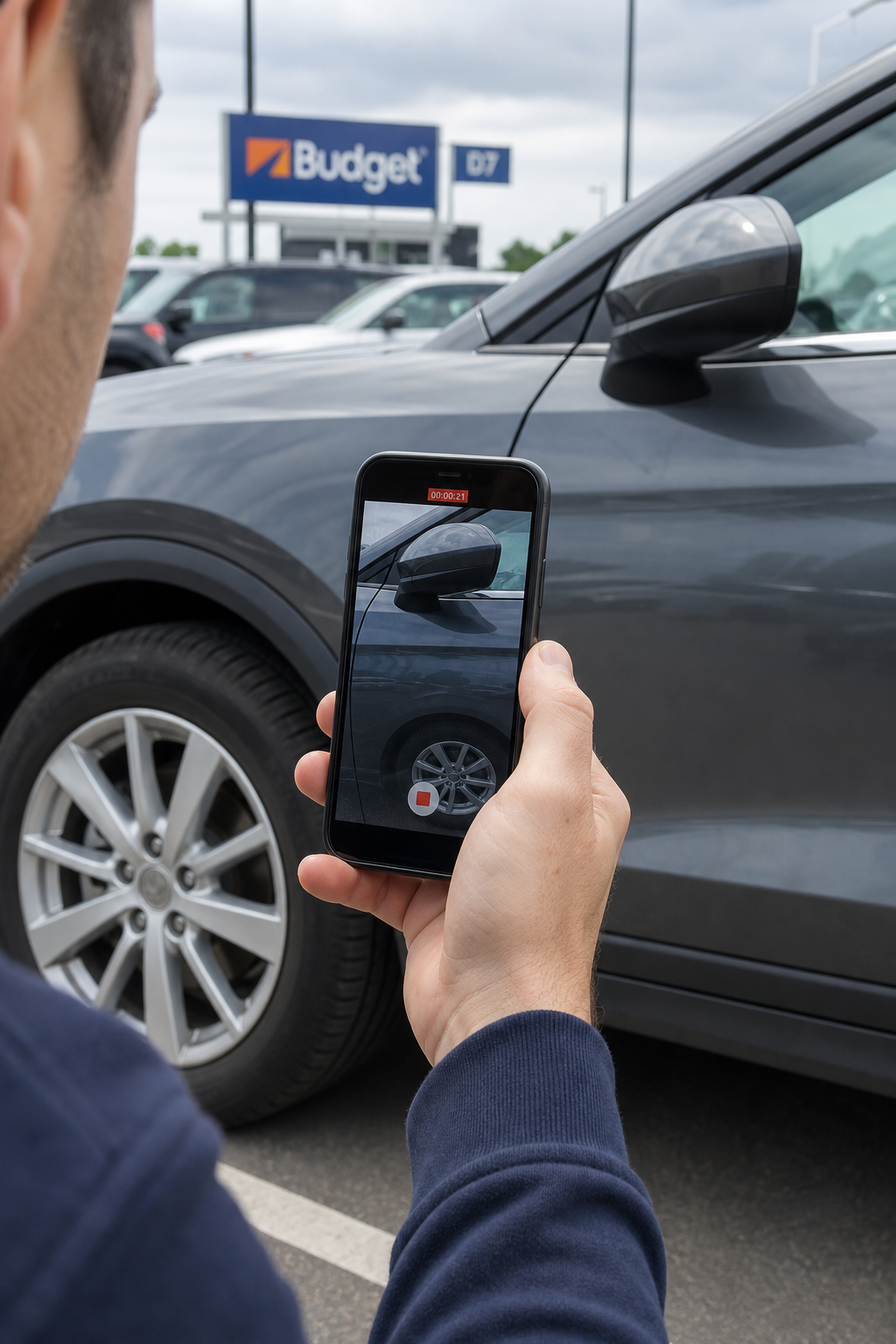
- Walk around the car and take a video on your phone. Show every angle, especially the wheels and bumpers.
- Note any existing scratches, dents, or cracks. Make sure the rental agent marks them on the agreement. If they won’t, your video is proof.
- Check the fuel gauge. It should be full. If not, note the level and take a photo.
- Test the lights, signals, windshield wipers, and air conditioning.
- Check the spare tire and jack are in the trunk.
One-way rentals: If you’re picking up in one city and dropping off in another, that’s a one-way rental. It’s super convenient for road trips that don’t loop back. But it often costs more. For example, our Amalfi Coast car rental guide provides driving tips for one-way coastal routes. Additionally, Citi’s guide to one-way car rentals explains that fees can vary widely. Always compare the cost with a round-trip. Sometimes the extra fee is worth the freedom.
At drop-off:
- Fill up the gas tank to the same level as pickup. Keep the receipt as proof.
- Clean out all trash and personal items.
- Do another walkaround video before handing over the keys.
- Get a receipt or confirmation that you’ve returned the car. This protects you from false claims later.
One youtuber shared a story where Avis charged him $98 to refill the tank even though he returned it full. Because he had a photo of the dashboard and the gas receipt, he got the charge reversed. Don’t skip this.
Bottom line: Thoroughly document the car’s condition with video at pickup and drop-off, keep fuel receipts, and get a return confirmation to avoid unjustified damage claims.
Step 5: Handle Insurance, Age Restrictions, and Tech Add-Ons
Insurance is confusing. Age rules are unfair. Tech add-ons are expensive. Let’s clear it up.
Insurance options:
- Loss Damage Waiver (LDW): This covers the rental car itself. If you have complete on your personal auto policy, check if it extends to rentals. Many credit cards (like Chase Sapphire Preferred) offer primary coverage , you can decline the rental company’s LDW and save $20-$30 per day.
- Liability insurance: Covers damage to other cars or property. Your personal policy might cover this, but verify.
- Personal accident insurance: Covers medical bills for you and passengers. Often redundant if you have health insurance.
Age restrictions: Most companies rent to drivers 21 and older, but charge a “young renter fee” for those under 25. For example, Hertz charges $25 per day for drivers under 25. Some states (Michigan, New York) allow renting at 18. Always ask about age surcharges before booking. Sometimes booking through a membership program (like Costco) can waive that fee.
Hertz’s official policy on renting to under-25 drivers confirms that the minimum age is 20 in most US locations, with a young renter fee added. If you’re 21-24, you can still rent, but expect to pay extra.
“I rented from Hertz at age 22 and the young driver fee added $175 to a one-week rental. Ouch.”
Tech add-ons: Rental companies love to upsell GPS, satellite radio, and Wi-Fi hotspots. Here’s the truth: your smartphone does everything. Use Google Maps or Waze for navigation , it’s free and always up-to-date. Download offline maps before you go in case you lose cell service. For music, use your own streaming service with Bluetooth. Skip the $15/day GPS.
If you want a built-in navigation system, it’s often cheaper to rent a car that has it as standard. But in 2026, even base models come with Apple CarPlay and Android Auto.
Roadside assistance: We noticed that none of the major rental companies openly advertise roadside assistance in their road trip policies. That’s a gap. Make sure you have a plan: either through your credit card, your auto club (AAA), or an add-on from the rental company. You don’t want to be stuck on the side of the road with no help.
Also, if you’re traveling internationally, consider a complete travel insurance policy that covers rental car-related issues. Southeast Asia travel insurance is one option that covers medical and trip interruptions, though you’ll want to check coverage specifics.
Bottom line: Understand your insurance coverage before you go, know if age fees apply, and bypass pricey tech add-ons by using your smartphone instead.
FAQs
Can I rent a car for a road trip if I’m under 25?
Yes, most major companies rent to drivers 20 and older, but you’ll pay a young renter fee (typically $25-$30 per day). Some states allow renting at 18. Booking through Costco Travel or using a corporate code might waive the fee. Always ask about discounts for young drivers.
What’s the best credit card for rental car insurance?
Cards like Chase Sapphire Preferred and Reserve, American Express Platinum, and Capital One Venture X offer primary rental insurance. That means you can decline the rental company’s LDW and save $20-$30 per day. Check your card’s benefits , some require you to decline the rental company’s coverage to activate the benefit.
Should I get the rental company’s GPS or use my phone?
Use your phone. Google Maps and Waze are free, more accurate, and always updated. Download offline maps before you leave in case you lose signal. The rental company’s GPS is overpriced , often $15 per day , and you’ll never build a return on that investment.
How do I avoid hidden fees when I rent a car for a road trip?
Always choose the “pay later” or “pay at counter” option with free cancellation. That way you can compare the total price including taxes and fees. Avoid airport locations if possible. Decline unnecessary insurance if your own policy covers you. And add only the extras you really need.
Is it cheaper to rent a car at the airport or off-site?
Off-airport is almost always cheaper because you avoid airport surcharges and concession fees. You might save $100-$200 on a week-long rental. The trade-off is you need to get to the off-site location , often a short Uber ride. Factor in that cost and time. For many, the savings are worth it.
What fuel policy should I choose when renting a car for a road trip?
Always choose “full to full” , you pick up with a full tank and return it full. This is almost always the most cost-effective. Avoid “pre-purchase” options where the rental company charges you for a full tank at a premium rate. Also avoid “return empty” where they charge you for a full tank at the end. Full to full gives you control.
Can I take a rental car across state lines or into Canada?
Most rental companies allow driving within the US without restrictions. For Canada, you need to get permission in advance (usually free, but you need the paperwork). Some companies prohibit driving into Mexico. Always check the rental agreement’s geographical restrictions to avoid voiding your insurance.
How many miles can I drive on a rental car for a road trip?
Most major companies offer unlimited mileage for standard rentals, but not always. Some budget brands or specialty vehicles have mileage caps (e.g., 100 miles per day). If you’re driving cross-country, make sure you get unlimited miles. Ask explicitly before booking. If not, calculate the cost of extra miles , it can add up quickly.
Conclusion: Hit the Road with Confidence
Renting a car for a road trip doesn’t have to be stressful or expensive. The key is to plan ahead. Start with a realistic budget that includes all the fees. Choose a vehicle that fits your group and offers good fuel economy. Hunt for discounts using membership programs like Costco, and compare prices on GreenSpicks to find the best deal.
When you pick up the car, take a video. Document everything. That simple habit can save you hundreds if a damage claim appears later. Understand your insurance options and don’t buy expensive add-ons you don’t need. And if you’re under 25, factor in the young driver fee but look for ways to waive it.
Remember that research we mentioned at the beginning? The unlimited mileage myth is real , many companies don’t advertise it, but most offer it. Always confirm. And don’t assume roadside assistance is included , get your own coverage through a credit card or auto club.
Now you know exactly how to rent a car for a road trip without falling into the common traps. We at GreenSpicks want you to focus on the adventure, not the paperwork. So go ahead, compare rates, book your car, and enjoy the open road. Safe travels!