Best Car Hire in Iceland Cheap Rentals and 4×4 Deals 2026
Planning a road trip across lava fields, waterfalls, black-sand beaches, and glacier views? Then choosing the right vehicle matters almost as much as choosing the route. Public transport can work for short city stays, but once you want freedom, photo stops, hidden hot springs, and flexible days, a rental car gives you control.
This guide breaks down how to find affordable car hire, when a 4×4 makes sense, what to check before booking, and how to avoid small mistakes that can turn into high costs. Greenspicks helps travelers compare offers across travel categories, so you can start with the Greenspicks homepage when looking for updated travel options.
Why Car Rental in Iceland Makes Travel Easier
A good car rental in Iceland can turn a strict itinerary into an open-road adventure. You’re not waiting for buses, rushing back for group tours, or skipping scenic pullouts because there’s no transport nearby. You choose the pace.
Many travelers land at Keflavik International Airport, collect a vehicle, and drive toward Reykjavik before heading farther out. That simple flow saves time, especially if your first night is outside the capital.
A rental car also helps when the weather changes your plans. Maybe the south coast looks stormy, but the west has clearer skies. With your own wheels, you can adjust without rebuilding the whole trip.

Car Rental Iceland: What Makes It Different?
Car rental in Iceland planning is a little different from renting in a warm city destination. Roads can shift from smooth asphalt to gravel tracks, wind can be strong, and winter weather can surprise even confident drivers.
You don’t need to panic. You just need to choose wisely. Match the vehicle to the season, route, and comfort level. A small economy car may work for summer city-and-south-coast travel. A stronger vehicle is better for mountain roads, remote stops, and colder months.
For a destination overview before building your driving plan, check this helpful Iceland vacation travel guide.
Renting a Car: When It’s Worth It
Renting a car makes the most sense when you want flexibility. If your plan includes waterfalls, national parks, beaches, villages, and countryside stays, driving saves a lot of hassle.
It may not be worth it if you’re only staying in Reykjavik for two nights and joining guided day tours. Parking, fuel, and insurance can add up. But for a longer trip, especially three days or more, having your own vehicle usually feels smoother.
The biggest benefit is timing. You can visit famous spots early in the morning or later in the evening, when tour crowds thin out. That alone can make your trip feel calmer.
How to Rent a Car in Iceland Without Overpaying
To rent a car in Iceland at a better rate, book early, compare multiple providers, and avoid choosing only by the lowest headline price. Cheap can become expensive if the deal has limited mileage, weak coverage, or costly add-ons.
Look at the full booking page before paying. Check whether taxes are included. Review pickup times. Read the fuel policy. Confirm the insurance excess. Small details matter.
Also compare deals from travel search platforms instead of opening one supplier and stopping there. Greenspicks is designed to help travelers compare available offers, including car-related travel pages such as cheap car rental comparison.
Best Rental Car Choices for Different Trips
The best rental car depends on your route. Don’t book a tiny city vehicle if you’re planning long gravel stretches, and don’t pay for a large SUV if you’re only driving from the airport to the capital and nearby towns.
Small Economy Car
An economy car is good for summer travelers on paved roads. It’s easier to park, cheaper to fuel, and often less expensive to book. It works well for Reykjavik, the Golden Circle, and many south coast stops.
Compact SUV
A compact SUV gives more comfort, better luggage space, and a steadier feel on windy roads. It’s a smart middle option for travelers who want confidence without paying for the biggest model.
4×4 Vehicle
A 4×4 is best for rougher routes, winter trips, and highland-style adventures where allowed. It’s also useful if you want extra ground clearance and better handling. Always check which roads are legal for your vehicle before leaving the main routes.
For deeper planning around four-wheel-drive choices, you can also read Greenspicks’ guide to 4WD car rental in Iceland.
Cars in Iceland: Manual or Automatic?
Cars in Iceland may be manual or automatic, depending on the supplier and category. Automatic vehicles can cost more, especially during busy months. If you need an automatic, reserve early rather than hoping for one at the counter.
Manual cars can be cheaper, but don’t choose one unless you’re comfortable driving it. The road, weather, and navigation already demand attention. Saving a little money isn’t worth stress behind the wheel.
Driving in Iceland: What Visitors Should Expect
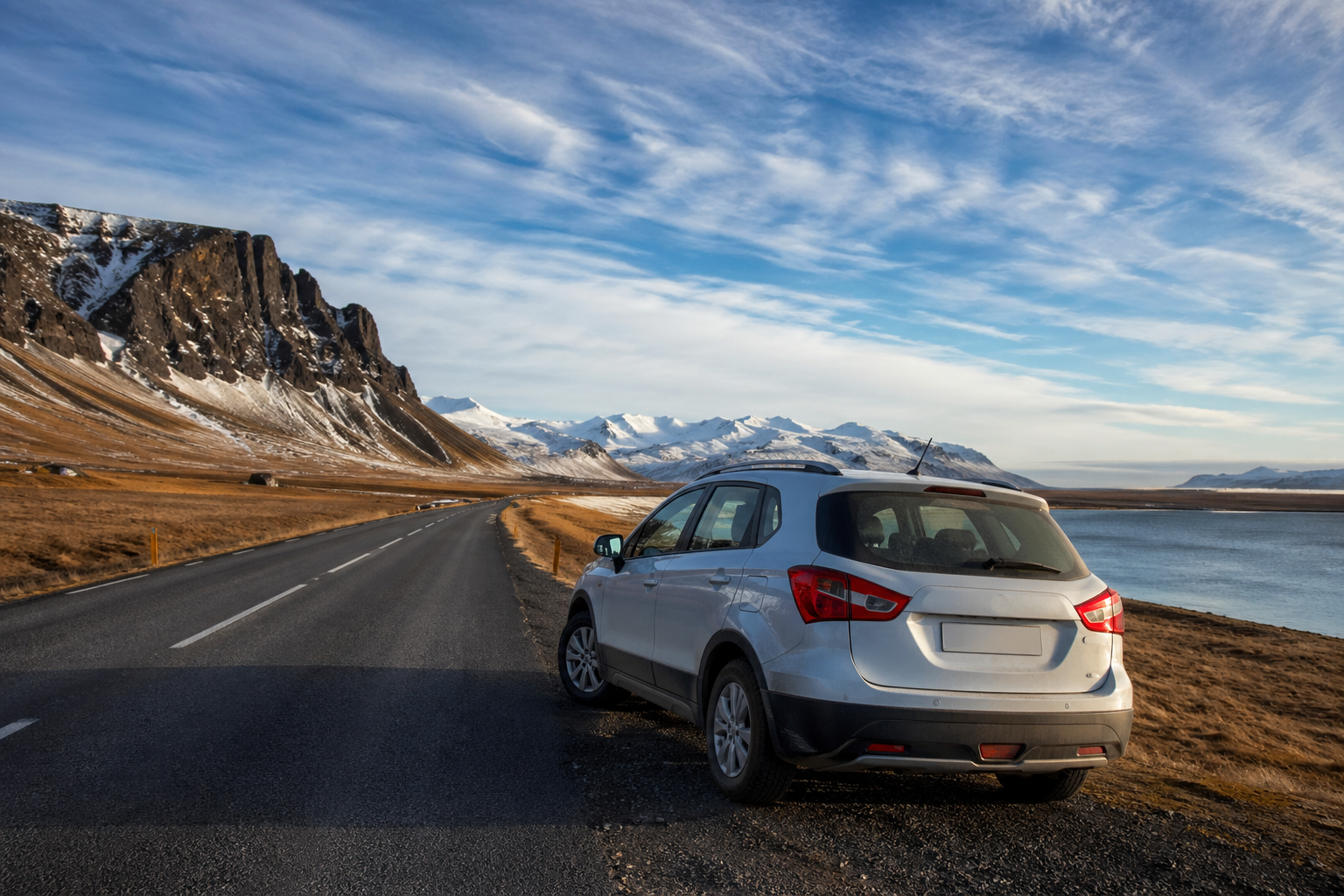
Driving in Iceland can be beautiful, but it deserves respect. Roads often pass through wide, open landscapes where the wind hits hard. The weather can change in minutes. Gravel sections may appear outside major routes.
Keep both hands on the wheel in strong winds. Slow down before the gravel begins. Never stop in the middle of the road for photos, even if the view looks unreal. Use pullouts and parking areas.
Animals can also appear near rural roads. Sheep don’t care about your schedule. Give yourself time, stay alert, and avoid rushing.
Speed Limits in Iceland and Road Rules
Speed limits in Iceland are usually clearly marked, and cameras are common in many areas. Rural roads may feel empty, but that doesn’t mean you should drive fast. Fines are expensive, and the weather can make braking distances longer.
Headlights should be on while driving. Seatbelts are required. Off-road driving is strictly illegal in Iceland because it damages fragile land that can take decades to recover.
Before leaving the rental office, ask about local road rules if anything feels unclear. A two-minute question can save you from a costly mistake.
Driving in Iceland in Winter
Driving in Iceland in winter is a different experience. Days are shorter, ice can appear suddenly, and storms may close roads. A route that looks simple on a map can become tiring when visibility drops.
Choose a vehicle with winter tires, allow extra time, and check road conditions before starting each day. Don’t push through bad weather just because you paid for accommodation somewhere else. Safety beats schedule.
If you’re nervous about winter roads, base yourself in fewer places and take shorter drives. You’ll still see incredible landscapes without feeling like every day is a challenge.
Kef Airport Pickup: What to Know
Many travelers choose KEF airport pickup because it’s convenient after landing. The main benefit is simple: you can start the journey right away. Some providers have counters inside the terminal, while others use shuttle transfers to nearby lots.
When picking up your rental car, inspect it carefully. Take photos of every side, including wheels, glass, bumpers, and the roof. Don’t rush this step, even if you’re tired after a flight.
Ask where to return the vehicle, how after-hours drop-off works, and what fuel level is expected. Clear answers reduce confusion on departure day.
Rental Deposit, Debit Card, and Payment Tips
The rental deposit can vary by supplier, vehicle class, and insurance choice. A valid credit card is often required, especially for higher-value vehicles. Some companies may accept a debit card, but conditions can be stricter.
Read payment rules before booking. Don’t assume all providers handle cards the same way. If your card has a low limit, the hold can become a problem at pickup.
Also, check whether the card must be in the main driver’s name. This is a common rule and can cause issues if someone else made the booking.
Car Rental Prices: What Affects the Cost?
Car rental prices depend on season, vehicle type, booking window, insurance, pickup location, and trip length. Summer usually costs more because demand rises. Winter can be cheaper, but larger vehicles and strong coverage may still push costs up.
The rental price can also change based on mileage limits and included extras. Some travelers only compare the daily rate, then get surprised by added fees.
Look at the total cost. That includes insurance, driver fees, child seats, navigation add-ons, and fuel policy. A slightly higher upfront rate may be better if it includes what you need.
How to Find the Best Car Rental Deals
To find the best car rental deals, compare early and stay flexible. Prices shift, and not every supplier shows the same package. Search for different pickup times if your travel schedule allows it.
Avoid booking more vehicles than you need. A large 4×4 looks exciting, but it may not be necessary for a simple summer route. At the same time, don’t under-book if your plan includes remote roads.
A good comparison habit helps. Look at travel pages like cheap car rental deals to understand how deal structures can differ.
Blue Car, Hertz Iceland, and Other Rental Companies
Blue Car, Blue Car Rental, Hertz Iceland, and other rental companies are familiar names travelers may see while comparing. Local and international brands can both be good choices, but the better option depends on your route, insurance needs, and pickup preference.
Don’t choose a car company based only on name recognition. Read the terms. Check customer support hours. Look at what happens if the vehicle breaks down outside the city.
Rental car companies provide different packages, so compare what’s included rather than assuming all offers are equal.
Car Hire in Iceland vs Standard Auto Rental
Car hire in Iceland is simply another way travelers describe booking a vehicle. Some websites use “hire car,” while others say “auto rental” or “vehicle booking.” The meaning is usually the same.
The wording matters less than the terms. Look for clear insurance details, fair cancellation rules, and transparent add-ons.
If a deal looks vague, skip it. A trusted car provider should make the important rules easy to find.
Rental Locations in Iceland
Rental locations in Iceland usually include Keflavik, Reykjavik, and select regional towns. Airport pickup is best for road trips beginning right after arrival. City pickup can be better if you spend a few days in the capital first.
Car rental locations can affect price. Airport convenience may cost more, but it saves transfer time. City pickup may reduce the number of rental days if you don’t need a vehicle immediately.
Think about your first and last day. Paying for a car while it sits parked in town is wasted money.
Driving the Ring Road
Driving the Ring Road is one of the classic ways to see the country. It circles much of the island and connects many famous regions. Travelers often plan seven to ten days, though more time feels better.
Iceland’s Ring Road includes long stretches where services are spread out. Fuel up before remote sections. Bring snacks. Keep a flexible mindset.
Don’t try to see everything in one lap if your schedule is short. Pick quality over distance. A slower route usually creates better memories.
Planning a Self-Drive Tour in Iceland
A self-drive tour in Iceland works best when you plan around regions instead of cramming random stops into each day. Group nearby sights together. Leave space for weather delays. Add rest stops.
Use maps, but don’t trust driving times blindly. Photo breaks, fuel stops, gravel roads, and wind all slow the day.
For broader route planning, Greenspicks also has a useful road-trip resource: plan a road trip with maps.
Road Conditions in Iceland
Road conditions in Iceland can shift fast, especially outside of summer. Check official updates before driving long distances. If a road is closed, respect the closure. It’s not a suggestion.
Gravel roads need slower speeds. Single-lane bridges require patience. Blind hills deserve caution.
A rental vehicle is not a magic shield. Drive for the conditions, not the posted limit.
Insurance and the Rental Agreement
The rental agreement is where the real details live. Before signing, check what’s covered and what’s excluded. Pay attention to gravel protection, sand and ash coverage, theft protection, and damage excess.
Some coverage may be worth adding depending on your route. For example, gravel protection can make sense if you’ll drive outside the city often. Sand and ash coverage may matter in areas exposed to strong winds and volcanic soil.
Ask questions before leaving the desk. Once damage happens, “I didn’t know” won’t help much.
Picking Up and Returning the Car
Picking up your rental car should be slow and careful. Match the paperwork to the vehicle. Check fuel level, mileage, tire condition, lights, and warning signs on the dashboard.
Returning the car should be just as organized. Refill fuel if required. Remove trash. Take final photos after parking in the return area.
If you drop off your rental outside office hours, keep proof of the return time and condition. Photos are your friend.
Cheap Car Options That Still Feel Safe
A cheap car can be a good choice when the route is simple and the provider is reliable. Budget doesn’t have to mean risky. It just means you’re choosing carefully.
Look for clean terms, fair mileage, and enough space for passengers and bags. Tiny vehicles feel less charming when luggage is stacked to the windows.
The right rental is the one that fits your actual trip, not the one that looks cheapest for one day.
Common Mistakes Travelers Make
Travelers often make the same errors. They book late, skip insurance details, underestimate the weather, or choose the wrong vehicle size.
Another common mistake is planning too many miles per day. The scenery is the point. If every day becomes a race, the trip loses its magic.
Also, avoid ignoring fuel stops. In remote areas, stations aren’t always around the next corner.
Best Car Rental Tips for 2026
For 2026 travel, book early if your dates fall in summer or around holidays. Choose free cancellation when possible, then keep an eye out for better offers.
Compare total cost, not just daily price. Review pickup location, included insurance, mileage, deposit terms, and support options.
If you plan to visit during winter, prioritize safety and comfort. A slightly better vehicle may be worth more than a small saving.
Final Thoughts
The best car hire choice depends on your season, route, and driving confidence. A small vehicle can be perfect for a light summer trip, while a 4×4 makes more sense for rougher plans or winter travel. Compare carefully, read the terms, and give yourself room to enjoy the road instead of racing through it.
A well-chosen vehicle lets you explore waterfalls before the crowds, pause at quiet viewpoints, and shape each day around the weather. That’s the real value of having your own wheels: freedom without chaos.
FAQs
Q: Do I need a 4×4 for my trip?
You don’t always need one. For summer routes on paved roads, a small or compact vehicle may be enough. A 4×4 is better for winter confidence, rougher routes, and certain approved mountain roads.
Q: Is it better to collect the vehicle at Keflavik or Reykjavik?
Keflavik is more convenient if you want to start driving right after arrival. Reykjavik pickup can save money if you’re spending your first days in the city without needing a vehicle.
Q: Can I use a debit card for the booking?
Some providers allow it, but many prefer or require a credit card for the security hold. Always check the payment terms before booking.
Q: What should I inspect before leaving the parking lot?
Check body panels, tires, windshield, roof, lights, mirrors, fuel level, and interior condition. Take clear photos and report any damage before driving away.
Q: How early should I book for 2026 travel?
Book as early as you can for peak summer dates, winter holiday periods, and popular vehicle types. Early booking usually gives you more choice and better flexibility.