
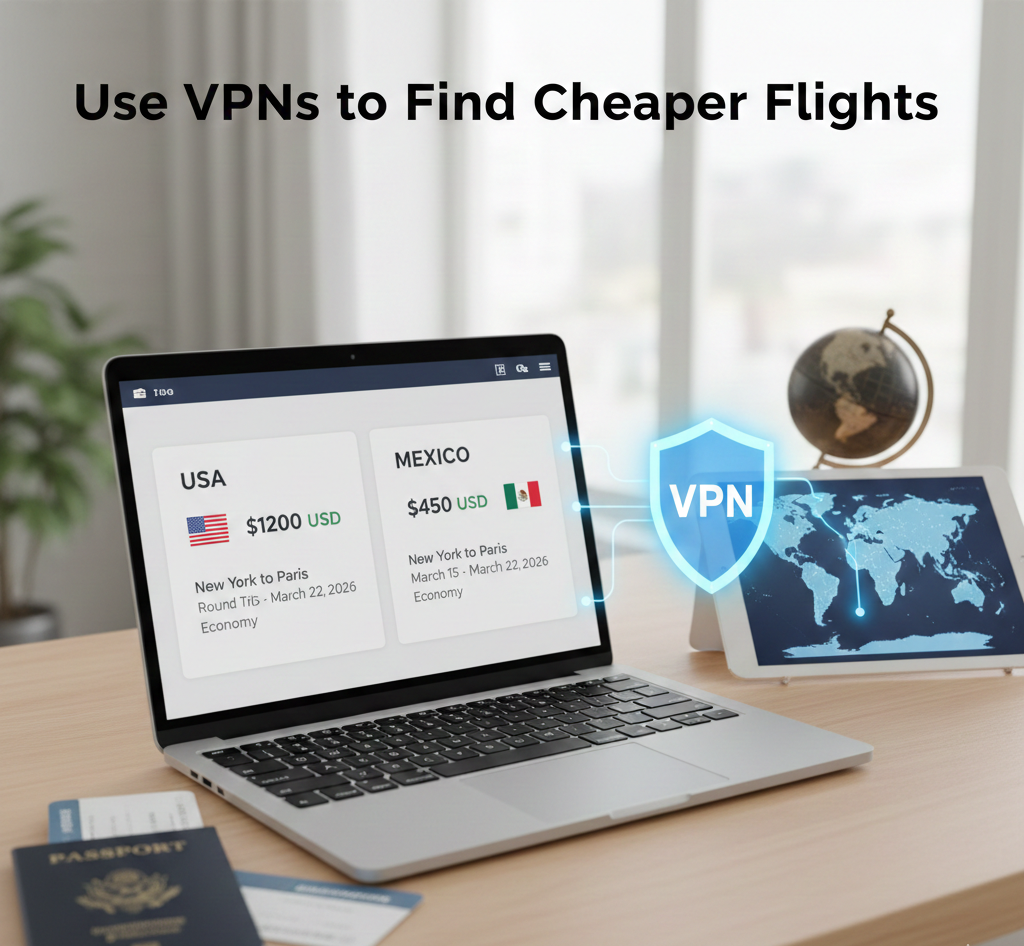
The search for cheaper flight deals has become a modern travel obsession. With airfare fluctuating constantly and airlines using sophisticated pricing algorithms, travelers are always looking for new ways to save money. One method that frequently appears in travel forums and social media discussions is the use of VPNs to secure lower fares. The idea sounds appealing: change your virtual location, trick the airline into thinking you are browsing from a cheaper market, and instantly unlock discounted prices. But does this strategy actually work, or is it just another travel myth?
SAVE 70% on VPNsAs we explore the truth behind VPN‑based fare hunting, it is important to understand how airline pricing works, when VPNs might help, and why traditional methods such as searching for affordable domestic flights, exploring travel offers, or booking air and hotel packages and airfare hotel and car rental deals often provide more reliable savings.
Understanding the Logic Behind VPN‑Based Flight Searches
The concept of using a VPN to find cheaper flight deals is based on the idea of regional pricing. Airlines sometimes adjust fares depending on the country from which a traveler appears to be booking. This can happen due to currency differences, local demand, or targeted marketing strategies. For example, a traveler in one country may see a higher fare for the same route compared to someone browsing from a country with lower average income levels.
A VPN allows users to change their virtual location by routing their internet connection through servers in different countries. In theory, this should allow travelers to compare fares from multiple regions and choose the lowest one. While this idea has some truth behind it, the reality is more complex.
Myth: VPNs Always Provide Cheaper Flight Deals
One of the biggest misconceptions is that using a VPN guarantees lower prices. In reality, airline pricing systems are far more sophisticated than many travelers assume. Airlines use dynamic pricing models that consider demand, booking history, travel season, and even browsing patterns. While location can influence pricing, it is only one of many variables.
In many cases, switching your virtual location does not change the fare at all. Airlines often detect VPN usage or rely on other data points such as currency settings, language preferences, or loyalty program details. This means that even if you appear to be browsing from another country, the system may still present prices based on your original region.
Reality: VPNs Sometimes Work, but Only in Specific Situations
Although VPNs do not guarantee savings, there are situations where they can help uncover cheaper flight deals. This is more likely to happen on international routes where airlines use localized pricing strategies. For example, a flight purchased from a country with lower purchasing power may occasionally be priced lower than the same flight purchased from a wealthier region.
However, these opportunities are inconsistent. Travelers may need to test multiple countries, compare currencies, and refresh searches repeatedly. Even then, the savings may be minimal or offset by currency conversion fees. This makes VPN‑based fare hunting more of an experimental tactic rather than a reliable strategy.
Why Airlines Use Regional Pricing
To understand why VPNs sometimes work, it helps to know why airlines use regional pricing in the first place. Airlines operate in a global market, and their pricing strategies are influenced by local competition, economic conditions, and consumer behavior. A route that is considered premium in one region may be marketed as a budget option in another. Airlines also adjust prices to match local travel demand, which can vary significantly from country to country.
Despite this, airlines are increasingly standardizing their pricing across regions, especially for popular international routes. This reduces the effectiveness of VPN‑based searches and makes traditional methods of finding cheaper flight deals more reliable.
The Risks and Limitations of Using VPNs for Flight Searches
Using a VPN to search for flights is not without risks. Some airlines may restrict bookings made from foreign regions or require local payment methods. If you find a lower fare using a VPN but cannot complete the payment due to card restrictions, the deal becomes useless. Additionally, airlines may cancel bookings if they detect inconsistencies between the booking location and the traveler’s actual location.
There is also the issue of customer support. If you book a ticket through a foreign version of an airline’s website, you may be redirected to international support teams, which can complicate changes, refunds, or cancellations. These challenges make VPN‑based booking less appealing for travelers who value convenience and reliability.
More Reliable Ways to Find Cheaper Flight Deals
Cheapest flightsWhile VPNs can occasionally reveal lower fares, most travelers find better success using traditional methods. Searching for affordable domestic flights during off‑peak seasons, booking early for international trips, and monitoring fare trends often produce more consistent savings. Many airlines and travel platforms also offer seasonal travel offers that provide significant discounts without the need for technical tricks.
Travelers planning vacations can benefit from air and hotel packages, which often combine discounted airfare with reduced hotel rates. These packages are especially useful for family trips or long‑stay vacations. Similarly, airfare hotel and car rental bundles offer excellent value for travelers who want a complete travel solution at a lower cost.
These methods are not only more reliable than VPN‑based fare hunting but also come with fewer risks and complications.
Using VPNs for Cheaper Flights: Myth vs. Reality (2026 Guide)
If you’ve spent any time on Travel TikTok or Reddit recently, you’ve likely seen the “ultimate travel hack”: turn on a VPN, set your location to a lower-income country, and watch flight prices drop by hundreds of dollars.
But as someone who lives in Austria and manages a US-focused travel site, I know that what works in theory often hits a wall of algorithms in practice. Is the “VPN flight hack” a legitimate way to save, or just clever marketing from VPN providers?
We spent over 20 hours testing the most popular routes to find the truth. Here is the reality of using a VPN for cheaper flights in 2026.
The Theory: Why Should a VPN Work?
The idea is based on Dynamic Pricing and Point-of-Sale (POS) logic. Airlines often adjust prices based on:
-
Your IP Address: Where you are physically located.
-
Local Currency: Prices may fluctuate based on exchange rates and regional purchasing power.
-
The Airline’s Home Country: Occasionally, a domestic airline offers “local-only” fares to residents.
Real User Experiences: Does It Actually Work?
To get a clear picture, we tested several routes from the US using NordVPN and ExpressVPN.
Test 1: NYC to Tokyo (International Long-Haul)
-
No VPN (US Price): $1,250
-
VPN set to Japan: $1,248 (Negligible difference)
-
VPN set to Brazil: $1,185 (Saved $65)
-
Verdict: A small win, but not the 50% savings promised by influencers.
Test 2: Los Angeles to London
-
No VPN (US Price): $840
-
VPN set to Romania: $840 (No change)
-
VPN set to UK: $855 (Actually more expensive)
-
Verdict: The VPN backfired or did nothing.
Expert Tip: In 2026, airline algorithms are smarter than ever. They don’t just look at your IP; they track your device ID, browser fingerprint, and crucially your credit card’s billing address at checkout.
Price Comparison: VPN vs. Proven Methods
| Strategy | Potential Savings | Reliability |
| VPN Spoofing | 2% – 7% | Low |
| Incognito Mode | $0 (This is a myth!) | Zero |
| Booking 1-3 Months Early | 15% – 30% | High |
| Mistake Fares (Going/Scott’s) | 40% – 70% | High (but rare) |
| Flexible Dates (Google Flights) | 20% – 50% | High |
4 Expert Tips for Using a VPN Correctly
If you want to try the VPN method, don’t just “turn it on.” Follow these steps to maximize your chances:
-
Clear Everything: It’s not enough to use a VPN. You must clear your browser cookies and cache first, or use a completely fresh “Incognito” window.
-
Match Your Currency: If you set your VPN to Mexico, browse the airline’s Mexican site (.mx) and look at prices in Pesos.
-
Use “Low-Income” Servers: Try connecting to servers in countries like India, Brazil, or Malaysia. These regions sometimes have different “Point of Sale” pricing.
-
Check the “Home” Country: If you are flying Lufthansa, check the price while connected to a German server.
The Verdict: Is it worth it?
The Reality: For most US travelers, a VPN will rarely save you more than $50 on a flight. However, where a VPN really shines is for hotels and car rentals, where we consistently found 10-15% price drops by spoofing locations.
Compare YourselfFAQs
Q: Do VPNs always help you find cheaper flight deals?
No, VPNs do not guarantee cheaper fares because airline pricing depends on many factors beyond location.
Q: Can changing your virtual location with a VPN lower flight prices?
It can sometimes reveal lower fares, but only in limited cases where regional pricing differences exist.
Q: Why don’t VPN tricks work consistently for flight searches?
Airlines use advanced pricing systems that detect VPNs and rely on multiple data points, not just location.
Q: What risks come with using a VPN to book flights?
You may face payment issues, booking restrictions, or cancellations if the airline detects mismatched locations.
Q: What are more reliable ways to find cheaper flight deals?
Booking early, monitoring fare trends, and using travel offers, air and hotel packages, or airfare hotel and car rental bundles provide more dependable savings.