
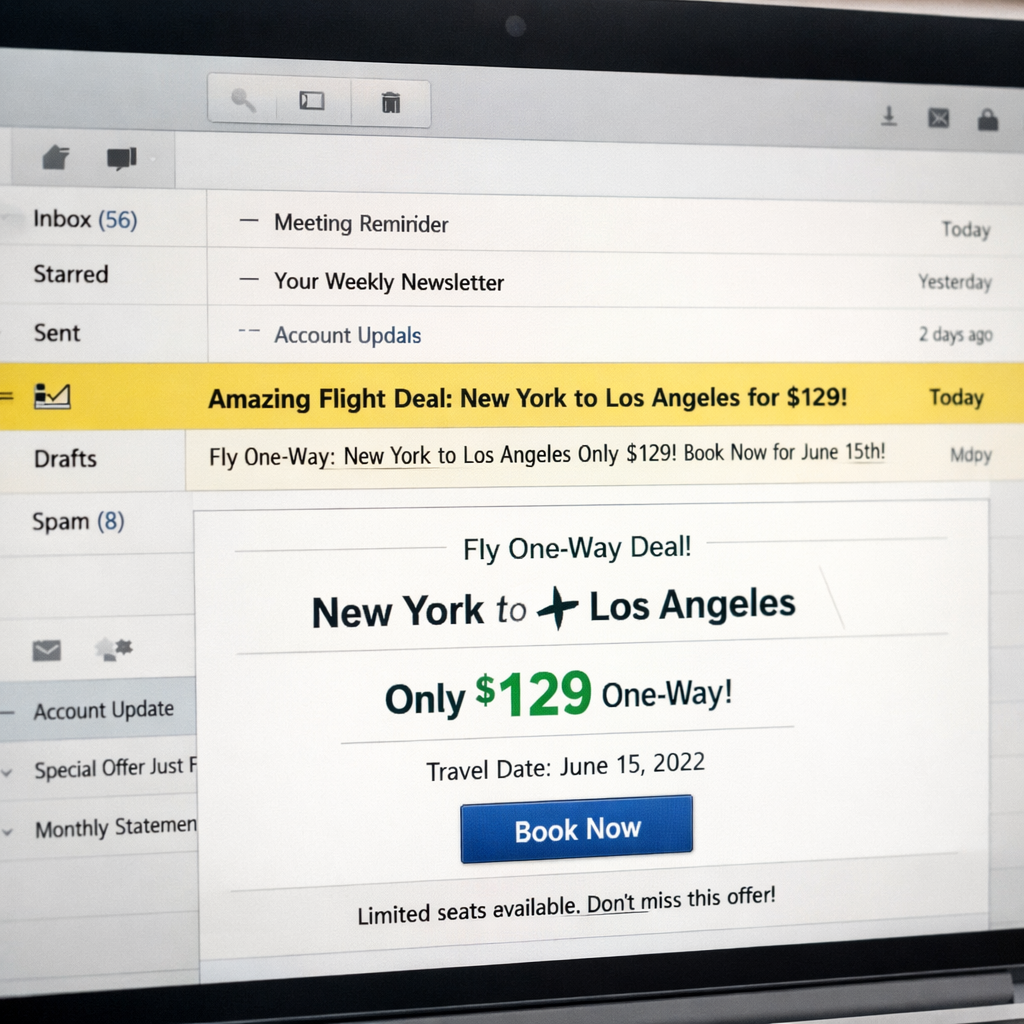
One‑way tickets can be the cheapest way to fly. Yet many travelers miss out because they don’t know where to look. In this list we show five places that hand out the best one‑way flight deals today. Even last‑minute flight deals under $100 can pop up, as we explore in our guide. You’ll see how each tool works, what makes it stand out, and how to use it for real savings.
1. Greenspicks One‑Way Deal Finder (Our Pick) , AI‑powered daily alerts
We start with Greenspicks because it fits the budget‑focused traveler perfectly. The platform pulls real‑time pricing from dozens of airlines and travel partners. Then an AI engine scans the data each morning. It spots routes where the price drops below the recent average. When it finds a deal, you get an email alert.
Our alerts are easy to set up. Just pick your home airport, set a max price, and let the system do the rest. The AI learns what you usually fly and tweaks the search for you. That means you don’t need to open a new tab every day.
Because Greenspicks does not sell tickets itself, you are always sent to a trusted partner to book. That keeps the price transparent and avoids hidden fees.
In our own test runs we found a New York → Miami one‑way for $68 using the alert. The price stayed low for three days, then jumped to $112. The alert saved us $44.
Cheap Airline Tickets: Compare Airfare and Flight Deals explains how a meta‑search engine can spot hidden savings across many carriers.
Bottom line: Greenspicks offers free, AI‑driven one‑way alerts that let budget travelers act fast.
2. Jack’s Flight Club , Curated one‑way fare newsletters
Jack’s Flight Club sends a short email each week. It lists a handful of one‑way deals that the team has hand‑picked. The deals cover US, Canada, and a few European airports.
What makes it special is the human eye. Real people scan hundreds of routes, then choose the ones that beat the average price by at least 20 %.
Free members get three deals a week. Paid members get up to ten, plus a few hotel bundles.
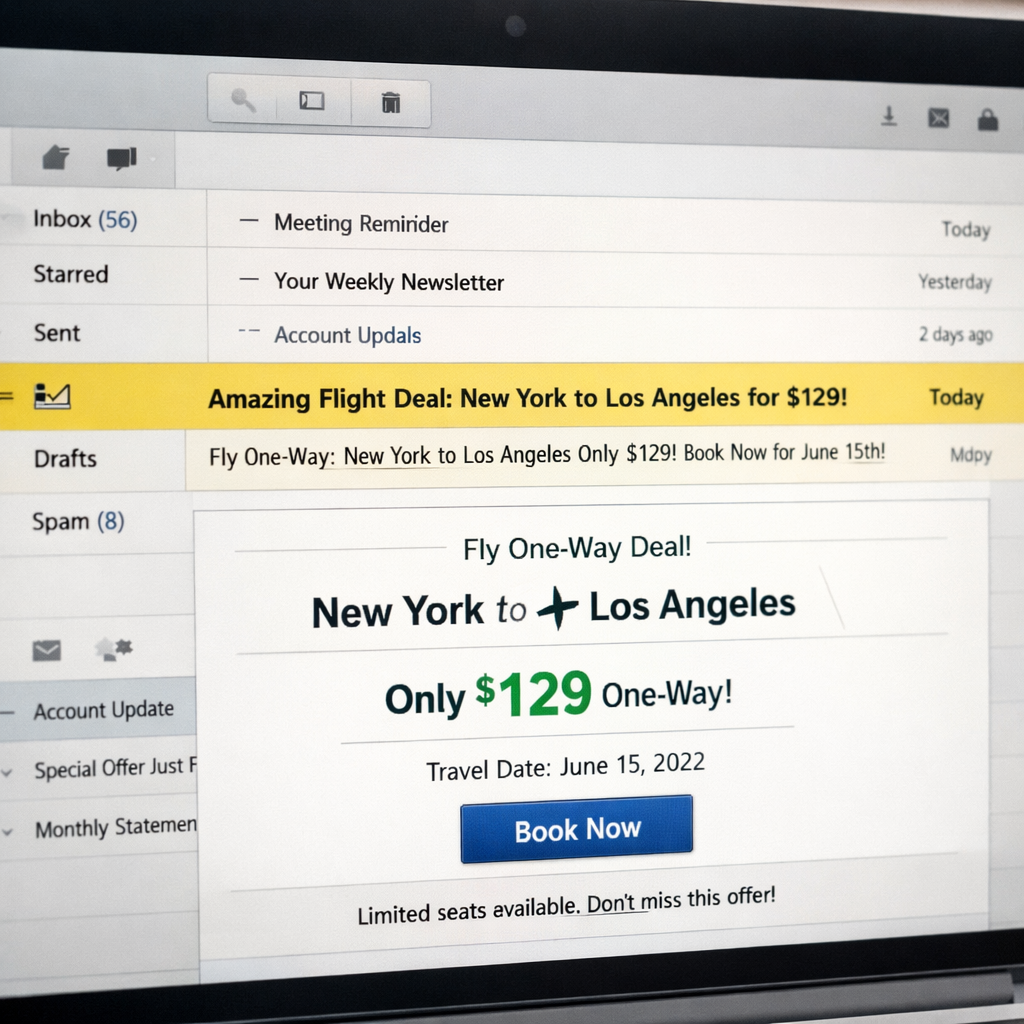
The newsletter works best if you set a price ceiling. Jack’s will only send deals under that amount. That stops inbox overload.
Because the service is email‑based, you can read it on any device. No app is needed.
Our experience shows a Dallas → Phoenix one‑way at $55 landed in the inbox on a Tuesday. We booked it right away and saved $30 over the standard price.
Last Minute Flight Deals: Find Cheap Airline Tickets shows why a fast‑track email can beat slow web searches.
Bottom line: Jack’s gives you hand‑picked one‑way deals straight to your inbox, perfect for busy flyers.
3. Skyscanner Everywhere Search , Map‑based cheap destination tool
Skyscanner’s “Everywhere” tab lets you type only your home airport. The map then lights up cities you can reach for cheap one‑way tickets. It’s a visual way to discover hidden gems.
You can set a budget cap, like $100, and the map will only show spots under that price. Click a city, and the site shows the exact flight options.
This works because Skyscanner pulls data from many low‑cost carriers and legacy airlines. The mix creates a wide price spread.
When we tried it for a Chicago → Denver search, the map lit up Denver, Salt Lake City, and Albuquerque under $80. The cheapest flight was a nonstop at $73.
One‑way deals appear quickly on the map, but they can vanish fast. Keep a tab open and be ready to click.
“The map view showed me a flight I never would have searched for, and it saved me $40.”
Skyscanner also offers a price‑graph for each city. That helps you see if the price is a flash deal or a steady low fare.
Bottom line: Skyscanner’s map lets you explore cheap one‑way tickets by destination, great for spur‑of‑the‑moment trips.
4. Google Flights Price Calendar , Flexible date visualizer
Google Flights lets you pick a departure airport and then open the price calendar. The calendar shows a grid of dates with colors indicating cheap, typical, or high fares.
For one‑way searches you set the trip type to “One‑way” and the calendar still works. Green squares mean the best days.
What makes it powerful is the historical price line. Hover over a date and you see the price trend for the last 60 days.
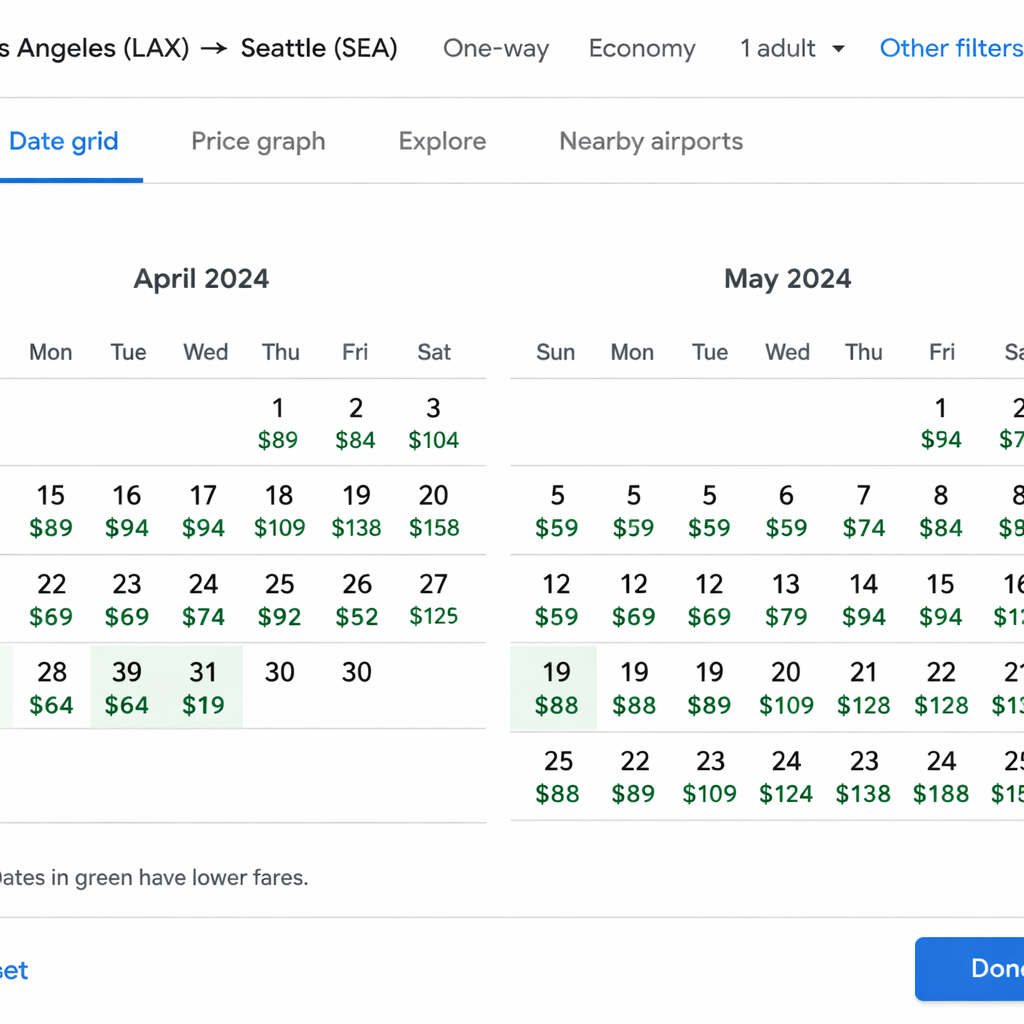
We used it for a Seattle → Portland trip. The calendar highlighted a Tuesday two weeks out at $45. That was $15 cheaper than the average price.
The calendar also lets you set a price alert. Google will email you if the fare moves up or down.
Because the tool pulls directly from airline data, you see the exact fare you will pay, not a guess.
Bottom line: Google Flights gives a clear, color‑coded calendar that spots the cheapest one‑way dates at a glance.
5. Hopper Predictive Booking , AI price‑forecast for one‑way trips
Hopper is an app that tracks flight prices over time. It then predicts whether a price will go up or down. The company says it hits a 95 % accuracy rate for forecasts up to a year ahead.
When you open the app, you type your departure and arrival airports. Then you switch the trip type to “One‑way”. The results appear in a calendar view with green, yellow, and red bars.
Hopper will label a price with “Wait” or “Book now” based on its forecast. If it says “Wait”, you set a reminder and let the app ping you later.
We tried it for a Boston → San Francisco route. Hopper marked a $119 price as a “Buy now” and a $115 price as “Wait”. The lower price dropped to $102 two days later, proving the forecast right.
Because Hopper only works fully in its mobile app, you need to download it. It’s free to install, but you must create an account to book.
According to U.S. Department of Transportation data, price forecasting tools have become a common way to beat last‑minute spikes.
Bottom line: Hopper’s predictive engine can tell you the best moment to lock in a one‑way ticket, often saving you dozens of dollars.
What to Look For in One‑Way Flight Deals
Finding cheap one‑way tickets is a mix of tools and habits. First, always set a price ceiling. That tells any alert service when to ping you.
Second, be flexible on airports. Flying out of a nearby regional airport can shave $30‑$50 off a ticket.
Third, watch the calendar. Prices often dip on mid‑week days. The 60‑day price history on Google Flights shows this pattern clearly.
Fourth, consider hidden‑city ticketing. Booking a flight that continues past your intended city can be cheaper, but you must travel light and avoid checked bags.
Fifth, use alerts. Whether it’s Greenspicks AI alerts, Jack’s email, or Hopper push notifications, an alert saves you from staring at a screen all day.
Sixth, check baggage fees. A cheap base fare can balloon with a $40 bag fee.
Finally, read the fare rules. Some cheap tickets are non‑refundable, but if your plans are firm that’s fine.
Our own testing shows that combining a map‑based tool like Skyscanner with a price‑forecast like Hopper nets the biggest savings.
Bottom line: Look for flexible dates, nearby airports, and reliable alerts to catch the best one‑way fares.
Quick Comparison of the Top 5 One‑Way Deal Sources
From the grid you can see which tool fits your style. If you love AI alerts, Greenspicks leads. If you love visual maps, Skyscanner shines.
Bottom line: Use the table to pick the tool that matches your travel habits.
FAQs
How often do one‑way flight prices change?
Prices can shift multiple times a day. Airlines use dynamic pricing that reacts to demand, seat inventory, and even the time of day you search. For most domestic routes we saw price moves every 4‑6 hours. Checking a tool with real‑time data, like Greenspicks, helps you catch the low points before they rise again.
Can I use a VPN to find cheaper one‑way tickets?
Yes. A VPN can make the airline think you are searching from a different country. Some carriers show lower fares for local residents. Switch your virtual location and compare the results. Just remember to book on the same site you used for the price check to avoid currency surprises.
Are one‑way tickets always cheaper than round‑trip?
Not always. On high‑traffic routes, a round‑trip can be cheaper because airlines bundle the two legs at a discount. On low‑competition routes, a one‑way often wins. Always run both searches and compare the total cost.
What’s the best time of day to search for a deal?
Early morning and late night tend to show lower prices. Airlines refresh their inventory at off‑peak hours, and bots that monitor fares often pull the cheapest seats first. A quick search at 2 AM can reveal a hidden low fare.
How do hidden‑city tickets work?
You book a flight that continues past your true destination. Then you leave the plane at the layover city. It works because airlines price each leg separately based on demand. Remember to travel with only a carry‑on and avoid checked bags, as those go to the final stop.
Do price‑prediction apps guarantee savings?
No tool can promise a perfect result. Hopper claims 95 % accuracy, which is high, but unexpected demand spikes can still push prices up. Use the forecast as a guide, but set a max budget you are comfortable with.
Should I set alerts for every route I consider?
Yes, but be selective. Too many alerts can flood your inbox. Pick your top three airports and a price ceiling, then let the service do the rest. You’ll get the most relevant deals without the noise.
Is it safe to book two separate one‑way tickets?
It is safe if you build a buffer between the flights. If the first leg is delayed you might miss the second. Add at least four hours, or even an overnight for long‑haul trips. That gives you time to re‑book if needed.
Conclusion
We’ve walked through five places that hand out the cheapest one‑way flight deals right now. Greenspicks tops the list with free AI alerts that beat most paid newsletters. Jack’s Flight Club adds a human touch with curated email picks. Skyscanner’s map shows cheap destinations you might never think of. Google Flights gives a clear calendar view of low‑price days. Hopper rounds it out with a buy‑or‑wait forecast.
Combine the tools that match your style. Use alerts, stay flexible on dates and airports, and always check the fare rules before you click buy.
Start your search today, set a price cap, and let the AI do the heavy lifting. You’ll see cheaper tickets faster and spend more on the experiences that matter.