
Disclosure: This article contains affiliate links. If you book through them, we may earn a small commission at no extra cost to you.
Japan is not a cheap flight from the US, but the gap between a good and a bad month is bigger than most people expect. On the Los Angeles to Tokyo route, the typical January round trip costs about $450 less than the same ticket in June. Pick the wrong week, such as Golden Week or the run-up to New Year, and you pay peak prices for a trip that will also be more crowded on the ground.
This guide pulls together the published fare data for the main US gateways, Japan’s own holiday calendar and the cost changes that took effect in 2026, so you can choose your travel month with real numbers. Every figure below names its source and was checked on November 1, 2026.
What Flights to Japan Cost, Month by Month
The table below uses KAYAK’s published route insights, which are based on round-trip searches over the past 12 months. They are averages and medians, not a price you are guaranteed to find, but they show clearly where the cheap and expensive months sit.
| Route (round trip) | Cheapest month | Most expensive months | Typical range | Cheapest day |
|---|---|---|---|---|
| All US airports to Japan | January ($888 avg.) | December ($1,351), June ($1,348) | $860–$1,557 | Tuesday (about 12% below Saturday) |
| Los Angeles (LAX) to Tokyo | January ($709) | June ($1,159), December ($1,150) | $722–$1,290 | Tuesday ($918 avg. vs. $1,071 on Friday) |
| San Francisco (SFO) to Tokyo | January ($817) | December ($1,314), June ($1,265) | $801–$1,435 | Tuesday ($1,009 avg. vs. $1,192 on Friday) |
| New York (all airports) to Tokyo | January ($1,060) | December ($1,714), June ($1,557) | $1,054–$1,682 | Monday (about 5% below average) |
Source: KAYAK flight route insights for United States to Japan, LAX–Tokyo, SFO–Tokyo and New York–Tokyo, checked November 1, 2026. Monthly figures are KAYAK’s averages or medians for round-trip economy searches over the past 12 months.
The pattern is the same on every route. January is the cheapest month, and December and June are the most expensive. December is driven by the holidays on both sides of the Pacific. June surprises many people, because it is the start of Japan’s rainy season, but it is also the start of the US summer vacation, and that demand from the American side pushes fares up.
The Going flight-deal service, which tracks fare drops rather than averages, adds a second angle. On its Japan page it says it found the most deals for travel dates in March and the fewest for July, and that its average Japan deal came in at $867 round trip, against an average fare of $1,355. That fits the KAYAK picture: cheap fares exist in several months, but July and the holiday peaks rarely produce them.
Peak Weeks and Cost Traps to Avoid
- Japan’s three big holiday periods. The Japan National Tourism Organization (JNTO) says prices rise and transport and hotels fill up during New Year (December 27 to January 4), Golden Week (April 29 to May 5) and the summer Bon holiday (the week around August 15), each plus the neighboring weekends.
- Cherry blossom season. Late March and early April are one of the most popular times to visit. In 2026 the Japan Meteorological Agency declared Tokyo’s cherry trees in bloom on March 19, and Tokyo reached full bloom about nine days later. Expect higher hotel prices in that window, even when the flight itself is reasonable.
- The new departure tax. Japan’s International Tourist Tax rose from 1,000 yen to 3,000 yen per departure on July 1, 2026, according to JNTO. Airlines normally include it in the ticket price, so compare total fares rather than base fares when you look at older price examples.
- Cheap fares on low-cost carriers. KAYAK lists ZIPAIR, a long-haul low-cost airline owned by Japan Airlines, as the cheapest airline on average from the US ($779 round trip). As with any low-cost carrier, checked bags and seat selection can cost extra, so add those before you compare. Our airline baggage fees comparison explains how to price the add-ons.
- Last-minute booking. Going notes that fares “almost always rise” at the 21-, 14- and 7-day points before departure. Japan is not a route where waiting for a last-minute bargain usually pays off.
How to Find the Cheapest Flight to Japan, Step by Step
- Start with flexible dates in January, February or early March. Search a whole month rather than fixed dates. After January 4, demand from Japanese holiday travelers drops and the January fares in the table above become realistic.
- Compare both Tokyo airports and Osaka. Tokyo has two international airports, Narita (NRT) and Haneda (HND). KAYAK lists Narita as the cheapest Japanese airport on average from the US ($1,019 round trip), and Osaka Kansai (KIX) as the second-cheapest recent destination. Haneda is closer to central Tokyo, so weigh the train fare and time against any saving.
- Try an open-jaw ticket. Flying into Tokyo and home from Osaka (or the reverse) avoids backtracking across the country and is often priced close to a simple round trip.
- Shift your departure day. On the West Coast routes Tuesday is the cheapest day to fly and Friday the most expensive; from New York it is Monday versus Saturday. Moving your outbound by a day or two can save $100 or more per ticket.
- Book in the right window. KAYAK’s data points to about 24 weeks ahead from LAX (around 12% cheaper than last-minute), about 19 weeks from SFO (around 17%), and about 13 weeks from New York (around 14%). For a January trip, that means booking between August and October.
For the bigger picture on booking days and fare cycles, see our guide to the cheapest day to buy airline tickets.

Tokyo Narita, the cheapest Japanese airport on average from the US in KAYAK’s data, lies farther from central Tokyo than Haneda, so add the train fare when you compare.
Which US Gateway Is Cheapest for Japan?
The West Coast wins on price and flight time. In KAYAK’s data the January median from Los Angeles ($709) is about $350 lower than from New York ($1,060), and the nonstop flight is roughly 12 hours from LAX and 11 hours 23 minutes from SFO, compared with 14 hours 32 minutes from New York.
| Gateway | Nonstop time to Tokyo | Nonstop airlines (per KAYAK) | Best booking window |
|---|---|---|---|
| Los Angeles (LAX) | About 12h 03m | ANA, Japan Airlines, American, United, Delta, Singapore Airlines | About 24 weeks ahead |
| San Francisco (SFO) | About 11h 23m | United, Japan Airlines, ANA, ZIPAIR | About 19 weeks ahead |
| New York (JFK/EWR) | About 14h 32m | Japan Airlines, United, ANA, American | About 13 weeks ahead |
Source: KAYAK route insights, checked November 1, 2026. Airline lists show carriers KAYAK reports on each nonstop route and can change by season.
If you live in the Midwest or on the East Coast, it can be worth pricing a cheap domestic flight to Los Angeles or San Francisco and connecting there. Book it on one ticket where possible, so the airline has to rebook you if the first flight is late. Going also points out that Dallas and Houston have direct flights to Japan, which can make them better starting points than smaller nearby airports.
What Tokyo Looks Like When You Land
This short guide from Expedia’s own channel shows Tokyo’s main neighborhoods in real footage, starting at the Shibuya scramble crossing and moving on to Shinjuku, Harajuku, Akihabara, Ueno and Asakusa’s Senso-ji temple.
Video: Expedia, “Ultimate Tokyo Travel Guide 2025: Shibuya, Harajuku & More!,” via YouTube (October 2025).
Is the Cheapest Month Also a Good Month to Visit?
January is cold but usually dry in Tokyo, and it is a good fit for city sightseeing, food, hot springs and skiing in Hokkaido or the Japanese Alps. Snow-sports areas are the exception to the cheap-season rule: Going notes that Hokkaido ski season peaks from December to March, so hotels there are not cheap in winter even when the flight is.
If you want milder weather without peak prices, look at late February and early March, before cherry blossom season, or late November to early December, after the autumn-leaves peak and before the New Year rush. Both windows sit outside JNTO’s busy periods.
Summer is the trade-off. June brings the rainy season and, from the US, some of the highest fares of the year. July and August are hot and humid, and Going reports the fewest deals for July travel dates. If summer is your only option, avoid the Bon week around August 15 and book as early as you can.
Easy Day Trips Once You Are in Japan
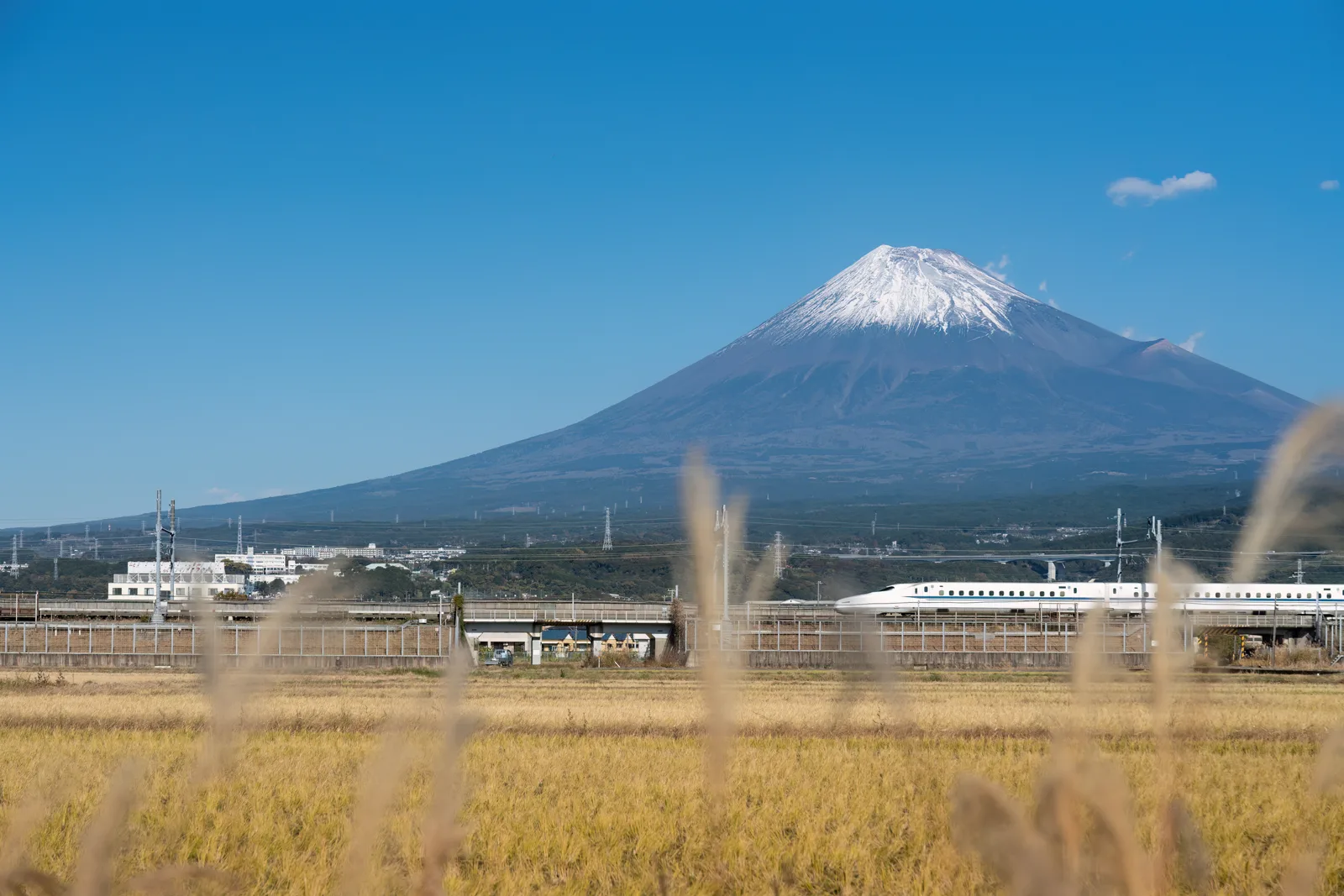
A cheap flight leaves more room in the budget for getting around. From Tokyo, the classic day trip is the Mount Fuji area. The Chureito Pagoda in Fujiyoshida, with Fuji behind it, is one of the most photographed views in Japan, and it is reachable by train and bus from Shinjuku. Further west, the Tokaido Shinkansen runs past Mount Fuji on the way to Kyoto and Osaka, which makes an open-jaw ticket (into Tokyo, out of Osaka) a natural fit.

The Chureito Pagoda and Mount Fuji in cherry blossom season, one of the busiest and most expensive times to visit.
Money-Saving Tips for Your Japan Trip
- Fly in mid-to-late January. It is the cheapest month on every US route in KAYAK’s data, and after January 4 you avoid the New Year peak.
- Fly from the West Coast if you can. LAX and SFO medians run several hundred dollars below New York. If you live elsewhere, price a positioning flight to the coast.
- Book 3 to 6 months ahead. That covers the best booking windows KAYAK shows for New York, San Francisco and Los Angeles.
- Consider an overnight flight. KAYAK found night departures to Japan cheaper on average than morning flights ($1,172 vs. $1,252). Our guide to cheap red-eye flights covers how to make a late departure work.
- Price the low-cost carrier with bags included. A ZIPAIR fare that looks noticeably cheaper can end up close to a full-service ticket once you add a checked bag and a meal.
- Book hotels early for spring and autumn. Flights are only part of the bill. Our hotel booking tips explain how to lock in a flexible rate and rebook if the price drops.
- Sort your data plan before you fly. An eSIM is usually cheaper than roaming. Compare options in our guide to SIM cards and eSIMs for Asia.
- Check insurance and entry rules. Look at our travel insurance and travel visa pages, and confirm entry requirements on official Japanese government sites before you book.
Planning a different long-haul trip? Our guide to cheap flights to Europe from the US uses the same approach for transatlantic routes.
FAQ: Cheapest Time to Fly to Japan
What is the cheapest month to fly to Japan from the US?
January. KAYAK’s data for all US airports puts the average round trip at $888 in January, the lowest of the year. Route by route, January medians were $709 from Los Angeles, $817 from San Francisco and $1,060 from New York (checked November 1, 2026). Plan to fly after January 4, when Japan’s New Year holiday ends.
What is the most expensive time to fly to Japan?
December and June. KAYAK lists December ($1,351) and June ($1,348) as the priciest months from the US. Within Japan, JNTO names New Year (December 27 to January 4), Golden Week (April 29 to May 5) and the week around August 15 as the busiest travel periods.
How far in advance should I book a flight to Japan?
Roughly 3 to 6 months ahead. KAYAK’s route data shows the best savings about 13 weeks out from New York, about 19 weeks from San Francisco and about 24 weeks from Los Angeles. Going recommends a window of about 2 to 8 months for Japan and warns that fares tend to rise inside the last three weeks.
What day of the week is cheapest to fly to Japan?
Tuesday on the West Coast routes and Monday from New York, according to KAYAK. From Los Angeles, Tuesday departures averaged $918 round trip against $1,071 on Friday.
Is it cheaper to fly into Narita or Haneda?
Narita is usually cheaper. KAYAK lists Narita (NRT) as the cheapest Japanese airport on average from the US. Haneda (HND) is closer to central Tokyo, so compare the fare difference with the extra train fare and time from Narita.
Did Japan’s departure tax go up?
Yes. Japan’s International Tourist Tax rose from 1,000 yen to 3,000 yen per departure on July 1, 2026, according to JNTO. It is normally included in your airline ticket.
Fares and booking windows in this guide were checked on November 1, 2026, from KAYAK’s route insights (United States to Japan, LAX–Tokyo, SFO–Tokyo, New York–Tokyo), Going’s Japan flight page, JNTO’s FAQ and tourist tax notice, and Japan Meteorological Agency bloom reports for 2026. Fares change daily, so treat them as a guide and check live prices before you book. How we check prices.